
Is Your Gut Trying to Tell You Something?
Using the 30-day Matula Tea™ program for gut health starts with understanding one important idea:
Your gut is not just a digestive system.
When digestion falls out of balance, the effects may extend far beyond occasional bloating or stomach discomfort. Some individuals dealing with chronic digestive irritation also report reflux, sluggish digestion, low energy, mental fog, or feeling unusually uncomfortable after meals.
Before reaching for another temporary digestive aid, it may be worth asking a more important question:
What is actually contributing to the imbalance in the first place?

The Real Problem Behind Many Digestive Issues
One major factor frequently discussed in digestive health research is Helicobacter pylori (H. pylori).
This bacteria can live within the stomach lining for years. In some individuals, it may contribute to gastritis, acid reflux, bloating, ulcers, stomach irritation, and ongoing digestive discomfort.
Researchers have linked H. pylori to a large percentage of gastric ulcers worldwide, which is one reason the bacteria continues attracting so much attention in digestive health discussions.
And for some individuals, the effects may not feel limited to digestion alone.
People dealing with long-term digestive irritation sometimes describe symptoms such as fatigue after meals, digestive heaviness, poor concentration, low energy, or brain fog. Researchers continue exploring the gut-brain connection and how digestive health may influence cognitive function and overall well-being more broadly.
If you constantly feel uncomfortable after eating or mentally drained throughout the day, your digestive system may be under more stress than you realize.
Could H. pylori Be Behind Your Symptoms?
H. pylori is surprisingly common.
Some individuals carry the bacteria without obvious symptoms, while others experience recurring digestive irritation that gradually interferes with daily life.
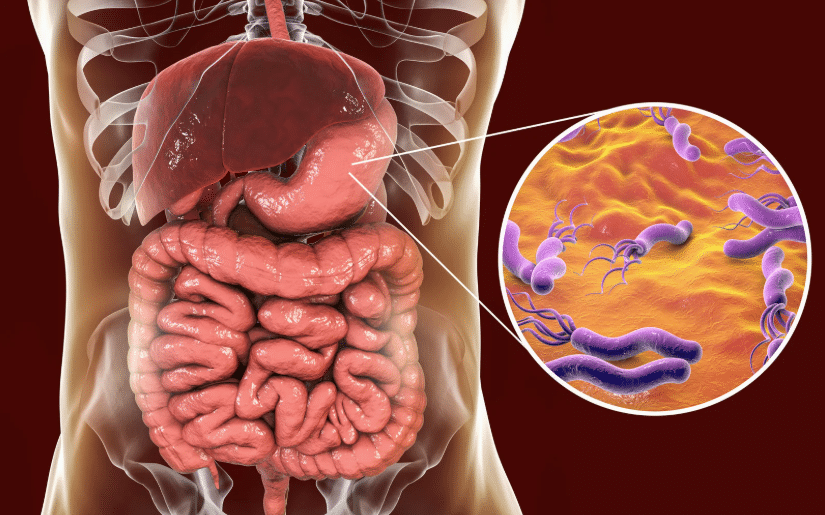
Common symptoms often discussed alongside H. pylori include:
- bloating
- reflux
- nausea
- burping
- stomach discomfort
- upper abdominal irritation
For many people, symptoms slowly become normalized over time. They adapt to the discomfort instead of identifying what may actually be driving it underneath.
This content is provided for educational and informational purposes only. It is not intended as medical advice or a substitute for consultation with a qualified healthcare provider. Always seek the advice of your doctor or other qualified health professional with any questions you may have regarding a medical condition.
Why Many Digestive Treatments Feel Temporary
Most people try common digestive solutions first.
Antacids, acid reducers, probiotics, and digestive supplements may temporarily ease symptoms, but they often do not address the underlying bacterial imbalance itself.
Antacids mainly reduce stomach acid for short periods, while probiotics are typically designed to support beneficial bacteria rather than specifically target H. pylori.
Conventional treatment usually involves antibiotics alongside proton pump inhibitors (PPIs), and for many individuals these therapies may still work successfully.
At the same time, antibiotic resistance has become an increasing challenge in H. pylori treatment discussions worldwide. Some individuals also report bloating, nausea, diarrhea, altered digestion, or fatigue during treatment.
This is one reason many people begin exploring broader digestive approaches alongside conventional care discussions.
Why the 30-Day Matula Tea™ Program Stands Apart
The 30-day Matula Tea™ program was developed specifically around H. pylori-related digestive concerns rather than functioning as a general detox tea or broad digestive cleanse.
The herbal blend contains wild-grown South African herbs traditionally associated with stomach and digestive health, including ingredients such as olive leaf, licorice root, and other naturally sourced herbal compounds.

Part of the early attention surrounding Matula Tea™ came from independent laboratory testing conducted by Professor Patrick Bouic at Stellenbosch University. In vitro testing reported antibacterial activity involving the herbal blend and H. pylori under controlled laboratory conditions.
Importantly, laboratory findings should always be interpreted carefully. In vitro testing does not automatically guarantee identical outcomes in every individual.
Still, the research helped distinguish the program from many general digestive supplements that were never specifically evaluated in relation to H. pylori.
This program is designed to support general digestive wellness and provide a structured approach. It is not intended as medical advice or a replacement for professional care. Statements on this website have not been evaluated by the Food and Drug Administration. This product is not intended to diagnose, treat, cure, or prevent any disease.
How the Program Fits Into a Broader Gut Health Approach
The overall structure of the 30-day Matula Tea™ program is relatively straightforward.
Many individuals exploring the program are typically looking for ways to calm digestive irritation, improve digestion, reduce bloating, or make meals feel more comfortable again. Some people also describe improvements in energy or mental clarity once ongoing digestive symptoms begin settling down.
One reason the program continues attracting attention is its simplicity. Rather than involving complicated supplement stacks or highly restrictive routines, the structure centers around consistent daily use over a defined 30-day period.
Some individuals also choose to track progress more carefully using stool antigen testing or urea breath testing before and after completing the program.
As with any digestive approach, experiences naturally vary from person to person.
Why Many Individuals Continue Exploring the Program
The 30-day Matula Tea™ program has now been used by more than 55,000 individuals worldwide.
People are often drawn to the program because of its focused H. pylori positioning, structured 30-day format, naturally herbal formulation, laboratory testing history, and long-standing public visibility within digestive health discussions.
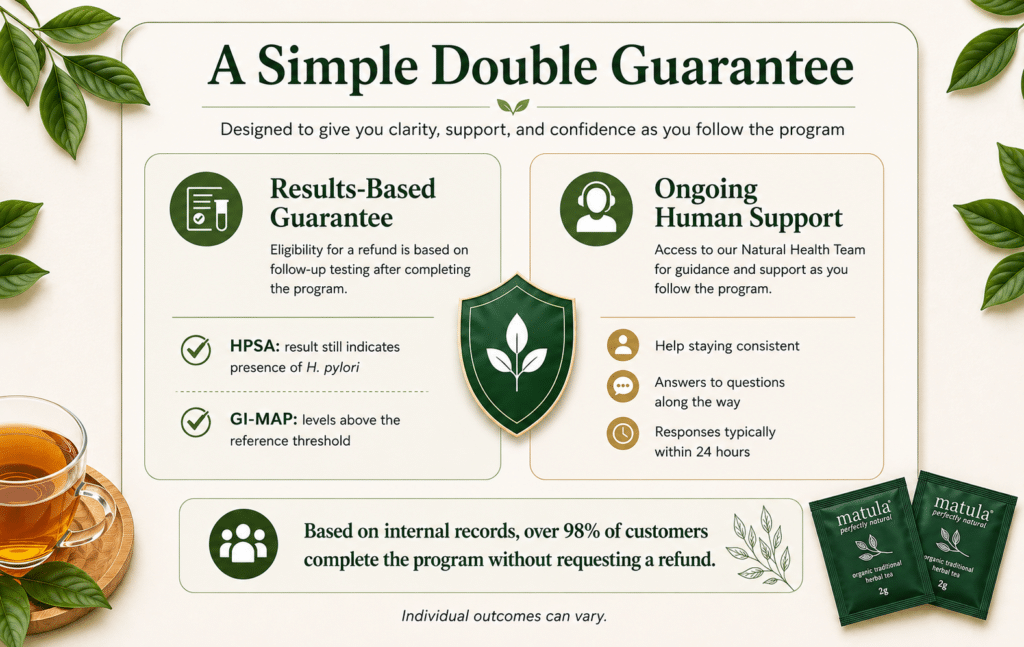
The company also offers a money-back guarantee if H. pylori remains present after completing the program according to the recommended guidelines.
For many individuals researching alternatives to repeatedly managing digestive symptoms without a clear long-term strategy, that combination continues attracting attention.
Learn More Before You Decide
If you are currently researching H. pylori-related digestive concerns and trying to better understand the different approaches available, these questions may help you think more clearly before deciding on your next step.
While many people successfully clear H. pylori with conventional treatment, others report challenging side effects, lingering digestive symptoms, or the need for additional treatment rounds. Experiences like these help explain why some individuals continue researching broader digestive health strategies even after completing therapy.
Before making your next decision, we recommend taking a few minutes to step back and evaluate all of your options carefully.
Many people find that gaining clarity around these questions helps them move forward with greater confidence and less uncertainty.

FAQ’s
H. pylori is a bacteria that can live in the stomach lining and has been associated with reflux, ulcers, gastritis, bloating, and digestive discomfort.
Some individuals report fatigue, brain fog, and poor concentration during periods of digestive imbalance and stomach irritation.
Antacids mainly reduce acid temporarily. They do not directly address possible underlying bacterial imbalance discussions involving H. pylori.
Yes. Independent in vitro testing conducted by Professor Patrick Bouic explored the herbal blend’s activity against H. pylori under controlled laboratory conditions.
The tea has remained widely discussed because of its focused H. pylori positioning, laboratory testing history, long-term public use, and structured 30-day program approach.
Some people prefer approaches focused on digestive balance and stomach support rather than relying entirely on temporary symptom relief products.
Key Takeaways
- Matula Tea for Gut Health targets H. pylori, a common bacteria linked to various digestive issues and symptoms.
- Conventional treatments may not effectively address the underlying bacterial imbalance, which often leads to temporary symptom relief.
- The herbal blend in Matula Tea™ supports digestive wellness, reduces symptoms like bloating and discomfort, and aims to restore gut balance.
- Many people choose Matula Tea™ for its natural composition, effectiveness, and the satisfaction guarantee offered after the program.
- The program follows a simple 30-day structure, emphasizing consistent usage for best results in digestive health.
Related Information
Gut health discussions often overlap with broader conversations involving H. pylori, reflux, stomach irritation, bloating, digestive discomfort, and bacterial imbalance within the digestive system.
Looking Into Matula Tea™ More Closely
If you are researching digestive wellness support connected to H. pylori, reflux, bloating, or recurring stomach discomfort, learning more about how the Matula Tea™ program works may help you decide whether it fits your situation.
References
- Mayo Clinic — Helicobacter pylori Infection (Updated 2024)
https://www.mayoclinic.org/diseases-conditions/h-pylori/symptoms-causes/syc-20356171 - National Cancer Institute — Helicobacter pylori (H. pylori) and Cancer (Updated 2024)
https://www.cancer.gov/about-cancer/causes-prevention/risk/infectious-agents/h-pylori-fact-sheet - Frontiers in Microbiology — Treatment of Refractory Helicobacter pylori Infection (Published 2022)
https://www.frontiersin.org/journals/microbiology/articles/10.3389/fmicb.2022.998240/full - Cleveland Clinic — Gut Microbiome (Updated 2025)
https://my.clevelandclinic.org/health/body/25201-gut-microbiome - Harvard T.H. Chan School of Public Health — The Microbiome (Updated 2024)
https://nutritionsource.hsph.harvard.edu/microbiome/