
Why Digestive Health Influences More Than Your Stomach
When we think of our brain, we often picture it as the command center of our body, controlling everything from our thoughts to our movements. But did you know that your gut, often called the “second brain,” plays a crucial role in your overall health and well-being? This concept might seem surprising, but let’s explore how our gut and brain are interconnected and why it’s so important to take care of our digestive system.
By taking steps to care for your gut, you’re not only enhancing your digestive health but also supporting your second brain, which in turn can lead to a happier, healthier life.
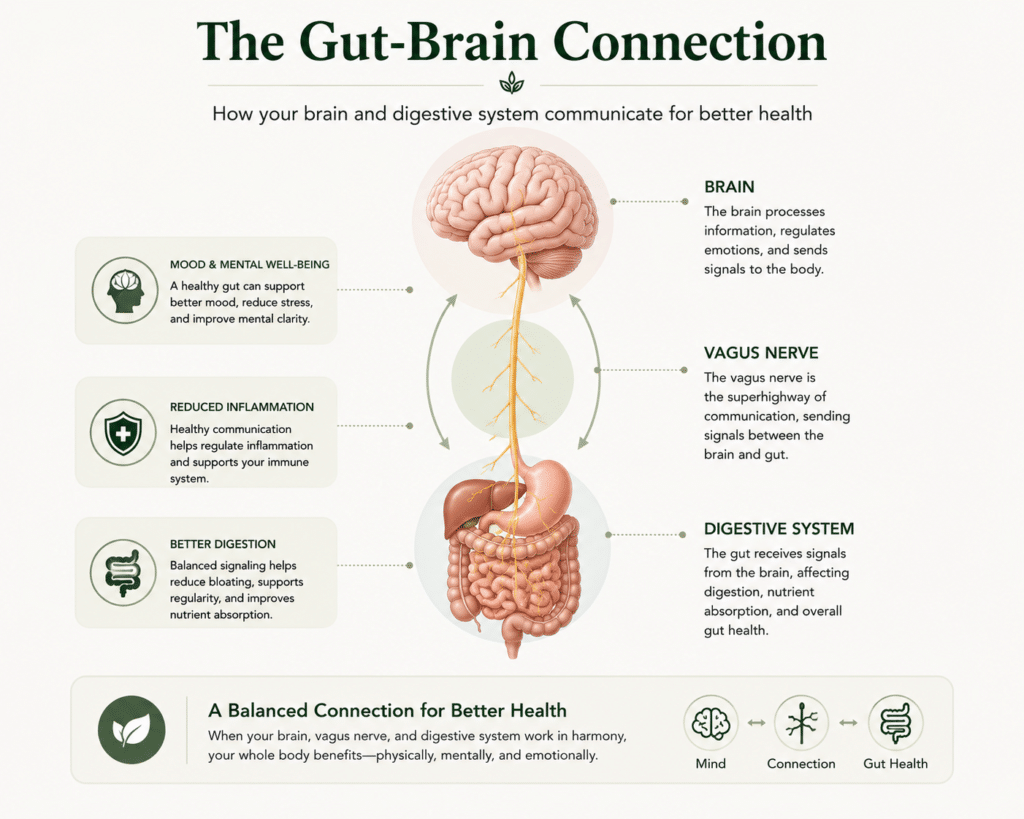
The Gut-Brain Connection
Your gut is home to the enteric nervous system (ENS), a complex network of neurons that line your gastrointestinal tract. This system can operate independently of the brain, which is why it’s sometimes referred to as the “second brain.” The ENS communicates with your brain through the vagus nerve and other pathways, constantly sending information back and forth.
Everyday Examples of the Gut-Brain Connection
- Butterflies in Your Stomach: This might feel a fluttering sensation in your stomach. This is your ENS reacting to stress signals from your brain.
- Gut Feelings: when you have a strong instinct or gut feeling about a situation – your gut sends signals that influence your emotions and decisions.
- Stress and Digestion: When you’re stressed, you may experience stomach cramps, diarrhea, or constipation.

This content is provided for educational and informational purposes only. It is not intended as medical advice or a substitute for consultation with a qualified healthcare provider. Always seek the advice of your doctor or other qualified health professional with any questions you may have regarding a medical condition.
The Microbiome: Your Gut’s Ecosystem
Your gut is also home to trillions of microorganisms, collectively known as the gut microbiome. These bacteria, viruses, fungi, and other microbes play a significant role in your health. They help with digestion, produce essential vitamins, and protect against harmful pathogens.
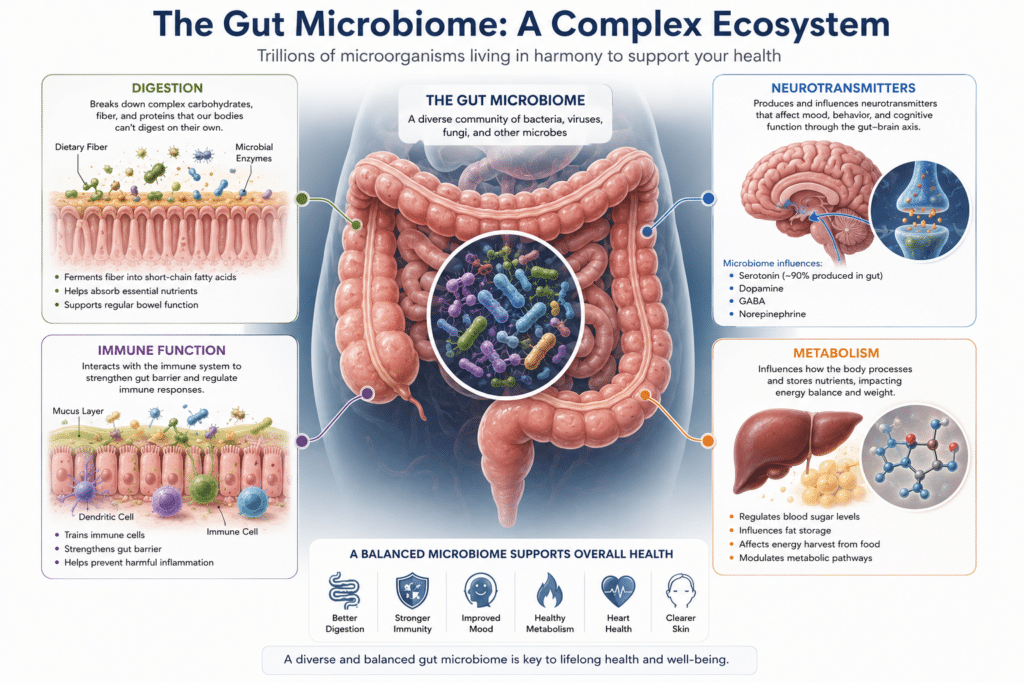
Impact of the Microbiome on Health
- Mental Health: Research has shown that an imbalance in gut bacteria can contribute to mental health issues like anxiety and depression. This is because your gut produces many of the same neurotransmitters as your brain, including serotonin, which affects mood.
- Immune System: About 70% of your immune system resides in your gut. A healthy microbiome helps to keep your immune responses balanced and effective.
- Weight Management: Certain gut bacteria can influence how your body extracts and stores energy from food, playing a role in weight gain or loss.
How to Support Your Second Brain
Taking care of your gut can have a profound impact on your overall health. Here are some simple ways to support your gut health:

- Eat a Balanced Diet: Include plenty of fiber-rich fruits, vegetables, whole grains, and fermented foods like yogurt and sauerkraut in your diet. These foods help nourish the beneficial bacteria in your gut.
- Stay Hydrated: Drinking enough water aids digestion and keeps things moving smoothly through your digestive tract.
- Manage Stress: Practice relaxation techniques like yoga, meditation, or deep-breathing exercises to reduce stress levels, which in turn can help your gut.
- Exercise Regularly: Physical activity promotes healthy digestion and can help maintain a balanced microbiome.
- Limit Antibiotics: While sometimes necessary, antibiotics can disrupt your gut microbiome. Use them only when prescribed and follow your doctor’s instructions.
Because the gut and brain communicate continuously, ongoing digestive irritation can sometimes affect much more than digestion alone. This is one reason some people begin exploring broader digestive wellness strategies when symptoms persist.
Can the 30-Day Matula Tea™ Program Help?
Some individuals exploring gut dysbiosis also investigate whether underlying digestive factors, including H. pylori, may be contributing to ongoing symptoms.
The 30-day Matula Tea™ program was developed specifically around H. pylori-related digestive concerns. At the center of the program is Matula Tea™, a blend of wild-grown South African herbs traditionally associated with digestive health.
Part of the interest surrounding Matula Tea™ came from independent laboratory testing that explored antibacterial activity involving the herbal blend and clinical strains of H. pylori under controlled in vitro conditions. While laboratory findings cannot be directly translated to outcomes in humans, the research helped distinguish Matula Tea™ from many general digestive products that were never specifically evaluated in relation to H. pylori.
Beyond its relationship to H. pylori discussions, some individuals are interested in the program because improving digestive health often involves more than addressing a single factor. Digestive balance can be influenced by diet, stress, microbial composition, stomach function, and broader lifestyle habits.
For that reason, the 30-day Matula Tea™ program is often viewed as one component of a broader digestive wellness strategy that may also include dietary improvements, appropriate testing, stress management, and professional healthcare guidance where needed.
As with any digestive health approach, individuals experiencing ongoing symptoms should consult a qualified healthcare professional to help determine the most appropriate course of action.


This program is designed to support general digestive wellness and provide a structured approach. It is not intended as medical advice or a replacement for professional care. Statements on this website have not been evaluated by the Food and Drug Administration. This product is not intended to diagnose, treat, cure, or prevent any disease.
Key Takeaways
- The gut, known as the ‘second brain,’ plays a crucial role in overall health through its connection to the brain.
- The gut-brain connection facilitates communication via the enteric nervous system and the vagus nerve, influencing emotions and digestion.
- A healthy gut microbiome supports mental health, immune function, and weight management by impacting neurotransmitter production and digestion.
- Support your gut health by eating a balanced diet, staying hydrated, managing stress, exercising, and using antibiotics judiciously.
- Matula Tea may help restore gut balance by exhibiting antimicrobial and anti-inflammatory properties, but consult healthcare providers before use.
FAQs
It’s the two-way communication system between your gut and your brain. It connects your emotional and digestive health.
Yes. An unhealthy gut can disrupt serotonin production and increase inflammation, both linked to mood disorders.
Watch for bloating, gas, fatigue, irregular bowel movements, or mood swings. These signs suggest your microbiome needs attention.
Yes, it’s made from natural herbs and typically safe. Still, talk with your healthcare provider if you’re on medication.
How long does it take for Matula Tea to work?
Most users take it for 30 days. Many notice improvements in digestion and energy within two to three weeks.
Absolutely. Your gut sends chemical signals that influence memory, mood, and decision-making.
Diet helps, but combining it with probiotics, stress reduction, and gentle herbal support like Matula Tea gives better results.
References
1. Harvard Health Publishing — The Gut-Brain Connection (Updated 2023)
https://www.health.harvard.edu/diseases-and-conditions/the-gut-brain-connection
A solid consumer-friendly explanation of the two-way communication between the digestive system and the brain.
2. Nature Signal Transduction and Targeted Therapy — Microbiota–Gut–Brain Axis and Its Therapeutic Applications in Neurodegenerative Diseases (Published 2024)
https://www.nature.com/articles/s41392-024-01743-1
A comprehensive review covering mechanisms of communication between the gut microbiome and the central nervous system.
3. Frontiers in Immunology — Dangers of the Chronic Stress Response in the Context of the Microbiota-Gut-Immune-Brain Axis (Published 2024)
https://www.frontiersin.org/journals/immunology/articles/10.3389/fimmu.2024.1365871/full
Useful for sections discussing stress, anxiety, and how chronic stress may influence gut health and microbiome balance.
4. PubMed — Microbiota-Gut-Brain Axis and Its Therapeutic Applications in Neurodegenerative Diseases (Published 2024)
https://pubmed.ncbi.nlm.nih.gov/38360862/
Strong peer-reviewed overview of bidirectional gut-brain communication and microbiome signaling pathways.
5. Harvard Medical School — The Gut and the Brain
https://hms.harvard.edu/news-events/publications-archive/brain/gut-brain
Excellent background resource explaining how the gut and brain communicate through shared signaling pathways and nervous system networks.