
Understanding the Gut-Brain Connection and Digestive Wellness
Most people think about digestion and the brain as completely separate systems.
But over the years, researchers have learned that the connection between gut health and mental well-being is far more complex than many people realized.
This is often referred to as the gut-brain connection.
Many individuals dealing with ongoing digestive discomfort notice this connection long before they ever read about it online.
They may experience bloating, reflux, stomach irritation, digestive imbalance, poor sleep, low mood, stress around eating, or difficulty feeling fully comfortable day to day.
In our experience since 2006, people dealing with long-term H. pylori support concerns often describe digestive wellness as something that affects far more than just the stomach.

What Is the Gut-Brain Connection?
The gut and brain communicate constantly through nerves, hormones, immune signaling, and the digestive system itself.
This communication network is sometimes called the gut-brain axis.
When digestion feels balanced and comfortable, many people report feeling more settled overall.
On the other hand, ongoing digestive discomfort can sometimes contribute to stress, frustration, food anxiety, and emotional fatigue.
That does not mean digestive imbalance directly “causes” mental health conditions.
Still, the connection between digestive wellness and overall well-being is becoming an increasingly important area of research.

Why H. pylori Conversations Often Go Beyond Digestion
People researching H. pylori support are usually not focused only on stomach discomfort.
Many individuals also describe:
- Ongoing bloating
- Reflux
- Stomach irritation
- Fatigue
- Stress around eating
- Digestive discomfort after meals
- General frustration with recurring symptoms
This is one reason long-term digestive wellness support conversations continue growing.
The reality is that ongoing digestive imbalance can gradually affect daily routines, confidence, comfort, and overall quality of life.
This content is provided for educational and informational purposes only. It is not intended as medical advice or a substitute for consultation with a qualified healthcare provider. Always seek the advice of your doctor or other qualified health professional with any questions you may have regarding a medical condition.
A Balanced Perspective on Treatment and Digestive Support
Conventional medical treatment remains an important part of H. pylori care.
Antibiotics, triple therapy, and quad therapy are still the most commonly prescribed medical approaches, and healthcare professionals play a central role in diagnosis and treatment planning.
At the same time, some individuals continue searching for digestive wellness support afterward.
Why?
Because digestive balance does not always feel fully restored overnight.
Some people continue experiencing bloating, digestive disruption, stomach irritation, nausea, reflux, or gut imbalance concerns after treatment.
Another factor that sometimes enters the conversation is antibiotic resistance. Healthcare professionals continue monitoring resistance patterns in H. pylori management, which can make treatment decisions more complicated in certain cases.
That does not mean antibiotics are ineffective.
In fact, they remain the standard treatment approach for many people and can be very helpful.
However, some individuals require multiple treatment attempts or continue looking for additional digestive wellness support afterward.
Why Simplicity and Consistency Matter
One thing we’ve noticed repeatedly over the years is that people dealing with long-term digestive discomfort often become overwhelmed by complicated wellness routines.
Multiple supplements.
Restrictive diets.
Constantly changing protocols.
And honestly, that can create even more stress around digestion.
This is where things get interesting.
Many people feel better supported when they simplify their routines and focus on consistency instead of chasing constant quick fixes.
That idea became one of the foundations behind the 30-day Matula Tea Program.
Understanding the Role of the Matula Tea Program
Matula Naturals has always approached digestive wellness from a structured support perspective.
Not as a replacement for medical care.
And not as a promise of instant results.
Instead, the Matula Tea Program was designed to support:
- Digestive wellness
- Gut balance
- Stomach health
- Long-term digestive habits
- Daily consistency
- Ongoing digestive comfort
The 30-day program includes twice-daily tea support, guidance, structure, and ongoing assistance.
For many customers, having a manageable daily routine becomes one of the most valuable parts of the experience.
The Emotional Side of Digestive Wellness
Frankly, digestive discomfort can become emotionally exhausting over time.
People often feel frustrated when symptoms repeatedly interrupt meals, social situations, travel, sleep, or everyday comfort.
We’ve seen this repeatedly since 2006.
Many individuals are not simply searching for another digestive product.
They are looking for stability.
Structure.
And a realistic digestive wellness approach they can maintain long term.

Supporting Digestive Wellness Since 2006
Since 2006, Matula Naturals has worked with individuals navigating H. pylori support concerns, bloating, reflux, stomach irritation, digestive imbalance, and long-term gut balance goals.
Over the years, one thing has remained clear.
People want practical support.
Not hype.
Not exaggerated promises.
And not overwhelming wellness systems they cannot realistically maintain.
That’s why the Matula Tea Program continues focusing on consistency, structure, and realistic digestive wellness support rather than unrealistic quick-fix messaging.
FAQ’s
The gut-brain connection refers to the communication network between the digestive system and the brain through nerves, hormones, immune signaling, and other biological pathways.
Many individuals report that ongoing digestive discomfort affects stress levels, eating habits, sleep quality, and overall daily comfort.
Yes. Despite issues with antibiotic resistance and side effects that some find difficulty coping with, antibiotics, triple therapy, and quad therapy remain the most commonly prescribed medical treatments for H. pylori.
Some individuals continue experiencing digestive discomfort, bloating, reflux, or gut imbalance concerns after treatment and look for additional long-term digestive support.
The program is designed to support digestive wellness, gut balance, stomach health, and consistent long-term digestive habits.
Key Takeaways
- The gut-brain connection shows that digestive wellness impacts mental well-being, affecting mood and emotional health.
- H. pylori can disrupt this connection, causing inflammation and nutrient absorption issues, which impact cognitive function.
- Treatments for H. pylori include antibiotics, but many still seek additional digestive wellness support post-treatment.
- Simplifying wellness routines and focusing on consistency is key for managing long-term digestive discomfort.
- The Matula Tea Program offers structured support for digestive health, emphasizing daily habits for lasting wellness.
Related Information
If you are researching H. pylori support, digestive wellness, or the connection between gut balance and overall well-being, the related resources below may help you continue exploring practical digestive support strategies.
Looking For A More Structured Approach to H. pylori?
If you’ve been researching the gut-brain connection, H. pylori support, or ways to improve long-term digestive balance, sometimes the next step is simply finding a routine that feels manageable and consistent.
Many people begin by exploring how the Matula Tea Program works, what the structured 30-day system includes, and why daily digestive habits matter so much for long-term wellness support.
Start the 30-Day Program for Natural H. pylori Support
When you are dealing with ongoing digestive discomfort, waiting often leads to more frustration.
A structured approach gives you clarity and direction from day one.
- 30-day herbal program designed to support digestive wellness
- Clinically researched herbal formula
- Free support throughout your program and beyond
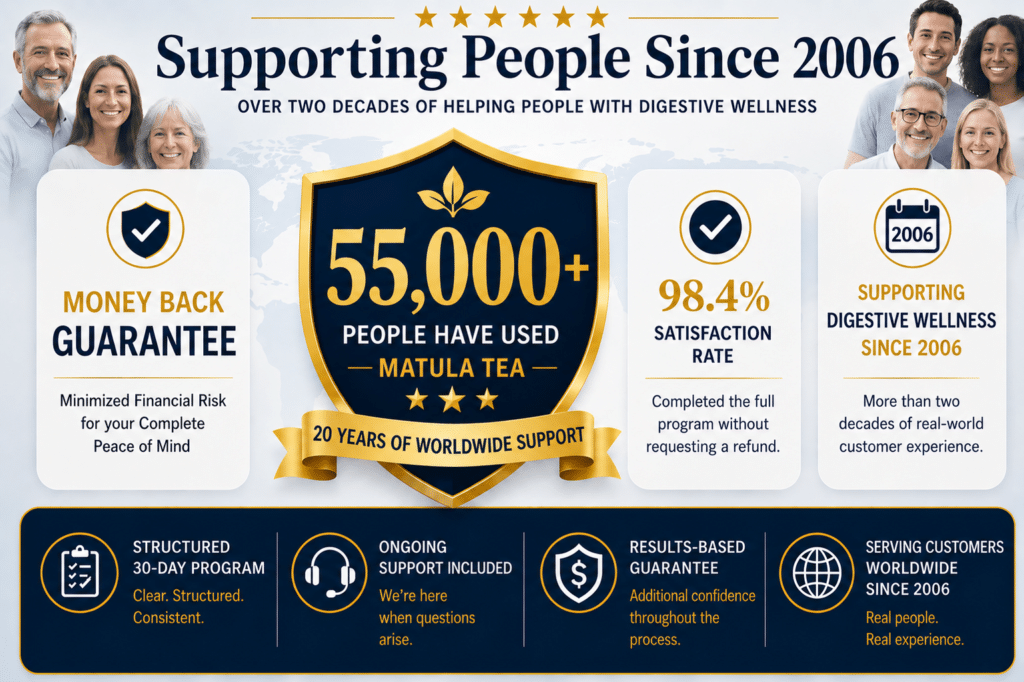
- Trusted by 65,000+ customers since 2006
- Money-back guarantee based on program criteria
Explore our natural approach to H. pylori support that has a clear step-by-step plan.
This program is designed to support general digestive wellness and provide a structured approach. It is not intended as medical advice or a replacement for professional care. Statements on this website have not been evaluated by the Food and Drug Administration. This product is not intended to diagnose, treat, cure, or prevent any disease.

References
- Mayo Clinic — Helicobacter pylori Infection
https://www.mayoclinic.org/diseases-conditions/h-pylori/symptoms-causes/syc-20356171 - Cleveland Clinic — Gut-Brain Connection
https://health.clevelandclinic.org/what-is-the-gut-brain-connection - Johns Hopkins Medicine — The Brain-Gut Connection
https://www.hopkinsmedicine.org/health/wellness-and-prevention/the-brain-gut-connection - World Gastroenterology Organisation — Helicobacter pylori Guidelines
https://www.worldgastroenterology.org/guidelines/global-guidelines/helicobacter-pylori - National Institute of Diabetes and Digestive and Kidney Diseases — Peptic Ulcers (Stomach Ulcers)
https://www.niddk.nih.gov/health-information/digestive-diseases/peptic-ulcers-stomach-ulcers