
Understanding the Cause of Gastric Ulcers
Stomach ulcers, also called gastric ulcers, form in the lining of your stomach. They can lead to discomfort, burning pain, or bloating.
Two common factors linked to ulcers include H. pylori and frequent use of NSAIDs like ibuprofen. Lifestyle habits such as smoking, regular alcohol intake, and ongoing stress can also affect your stomach lining.
You can take simple steps to support your digestive health. This page walks you through key causes, prevention tips, and natural ways to support your stomach.
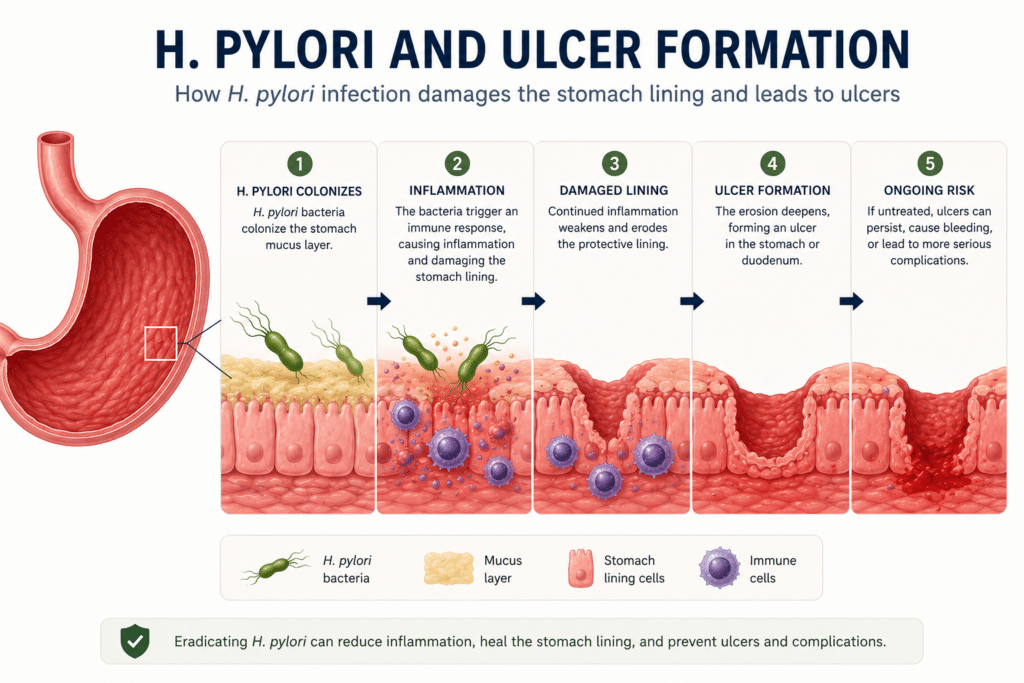
Cause of Gastric Ulcers
Understanding what contributes to ulcers helps you make better daily choices. Below are the main factors to be aware of
H. Pylori Infection Explained
Helicobacter pylori (H. pylori) is a common bacteria linked to digestive discomfort. It may affect the stomach lining and is often discussed in connection with gastric ulcers.
It can spread through contaminated food, water, or close contact. Many people carry it without symptoms. Others report bloating, nausea, or stomach discomfort.
Testing options include breath, stool, or blood tests. If you are exploring natural H. pylori support, understanding your status can help guide your next steps.

Impact of NSAIDs on Your Stomach
Nonsteroidal anti-inflammatory drugs (NSAIDs) like ibuprofen and aspirin are widely used for pain relief. Frequent or long-term use may affect your stomach lining.
If you rely on these often, speak with your healthcare provider about safer long-term strategies. Even small adjustments can reduce added strain on your stomach.

Lifestyle Factors and Gastric Ulcers
Your daily habits shape your digestive health.
- Smoking may irritate the stomach lining
- Alcohol can increase stomach acid levels
- Chronic stress may affect digestion and comfort
Spicy or acidic foods may not cause ulcers directly, but they can trigger discomfort if your stomach is sensitive.
Simple changes can support your stomach:
- Reduce alcohol intake
- Stop smoking
- Practice daily stress management such as walking or breathing exercises

This content is provided for educational and informational purposes only. It is not intended as medical advice or a substitute for consultation with a qualified healthcare provider. Always seek the advice of your doctor or other qualified health professional with any questions you may have regarding a medical condition.
Why Understanding The Cause Matters
Many people focus entirely on ulcer symptoms.
The problem is that symptoms alone rarely explain why ulcers develop in the first place.
Understanding the underlying cause can help guide more informed discussions with healthcare professionals, influence testing decisions, and help identify factors that may be contributing to ongoing stomach irritation.
For example, someone whose ulcer is linked to frequent NSAID use may need a very different strategy than someone whose ulcer is associated with H. pylori.
This is one reason identifying the underlying cause is often just as important as managing symptoms.
That one section immediately improves patient relevance.
Gastric Ulcers – Prevention and Support Strategies
You can take practical steps to support your digestive system and reduce common triggers.
How to Support Your Stomach
- Limit NSAID use
Ask your healthcare provider about alternatives if you need long-term pain support. - Build better habits
Reduce smoking and alcohol intake to support your stomach lining. - Manage stress daily
Even 10 minutes of breathing or stretching can make a difference.
Common Medical Approaches
If H. pylori is identified, doctors often recommend antibiotics alongside acid-reducing medications. Some people explore alternatives due to side effects or concerns around antibiotic resistance.
You can learn more about this topic here: antibiotic resistance. You can also read reported experiences here: CLICK HERE.
Diet also plays a role. Many people include foods such as:
- Fiber-rich fruits like apples
- Foods with natural plant compounds like cranberries
Regular check-ins with your healthcare provider help you track progress and adjust your approach.
Natural Options for Digestive Support
Many people explore natural options as part of their routine.
- Matula Tea: A clinically researched herbal formula designed to support your body’s natural response to H. pylori, a common factor in digestive discomfort.
- Probiotics: Help support gut balance and digestion
- Honey: Often used for its soothing properties in the digestive tract
Our comprehensive 30-day herbal program includes Matula Tea for natural H. pylori support. It also includes free support throughout your program and beyond, so you are not left guessing your next step.
If you are exploring natural H. pylori support, this structured program gives you a clear starting point with guidance included.

Learn More Before You Decide
If you are currently researching H. pylori-related digestive concerns and trying to better understand the different approaches available, these questions may help you think more clearly before deciding on your next step.
While many people successfully clear H. pylori with conventional treatment, others report challenging side effects, lingering digestive symptoms, or the need for additional treatment rounds. Experiences like these help explain why some individuals continue researching broader digestive health strategies even after completing therapy.
Before making your next decision, we recommend taking a few minutes to step back and evaluate all of your options carefully.
Many people find that gaining clarity around these questions helps them move forward with greater confidence and less uncertainty.
Embracing Natural Support
Why People Choose Natural Approaches
Many people prefer simple, natural options as part of their routine. These approaches focus on supporting your body without adding extra strain.
Independent laboratory research by Prof. Patrick Bouic PhD examined the formula’s properties in controlled testing, including its relevance to H. pylori support.
You also avoid concerns linked to repeated antibiotic use, which some people find challenging over time.
Take the Next Step
If you are still dealing with recurring digestive discomfort, it may be time to try a structured approach.
Our 30-day Matula Tea program for natural H. pylori support, is has been used by 25,000+ satisfied customers since 2006. Every order includes free support and a money-back guarantee, so you can explore this option with confidence.
The sooner you start, the sooner you can understand how your body responds and decide your next step.
Start the 30-Day Program for Natural H. pylori Support
When you are dealing with ongoing digestive discomfort, waiting often leads to more frustration.
A structured approach gives you clarity and direction from day one.
- 30-day herbal program designed to support digestive wellness
- Clinically researched herbal formula
- Free support throughout your program and beyond
- Trusted by 65,000+ customers since 2006
- Money-back guarantee based on program criteria
Explore our natural approach to H. pylori support that has a clear step-by-step plan.
This program is designed to support general digestive wellness and provide a structured approach. It is not intended as medical advice or a replacement for professional care. Statements on this website have not been evaluated by the Food and Drug Administration. This product is not intended to diagnose, treat, cure, or prevent any disease.
References
- Evolution of Helicobacter pylori Resistance to Antibiotics: A Topic of Increasing Concern
https://pmc.ncbi.nlm.nih.gov/articles/PMC9952372/ - MDPI – Antibiotic Resistance and Therapy for Helicobacter pylori
https://doi.org/10.3390/antibiotics12121669 - Mayo Clinic H. pylori Symptoms
https://www.mayoclinic.org/diseases-conditions/h-pylori/symptoms-causes/syc-20356171 - Treatment of refractory Helicobacter pylori infection: A new challenge for clinicians
https://www.frontiersin.org/journals/microbiology/articles/10.3389/fmicb.2022.998240/full - Helicobacter pylori antibiotic resistance: a global challenge in search of solutions
https://gut.bmj.com/content/74/10/1561