
Understanding Why Some People Continue Searching for Answers
Most people assume H. pylori is a fairly straightforward problem.
You take the prescribed antibiotics, complete the treatment, retest, and move on with your life.
For many people, that’s exactly what happens.
But for others, the experience is far more complicated.
Over the years, we’ve heard from countless individuals who expected a quick resolution, only to find themselves dealing with repeated treatment attempts, lingering digestive symptoms, conflicting advice, and growing frustration.
What catches many people off guard isn’t necessarily the infection itself.
It’s everything that can happen when treatment doesn’t go as planned.
Growing antibiotic resistance. Unsuccessful eradication attempts. Persistent digestive discomfort. Ongoing uncertainty about what to do next.
By the time many people discover these realities, they’ve already spent months searching for answers.
Understanding these challenges can help you make more informed decisions moving forward.

Why Standard H. pylori Treatment Doesn’t Always Deliver the Expected Outcome
One of the most common misconceptions about H. pylori is that treatment guarantees eradication.
Unfortunately, that’s not always the case.
Triple Therapy and Quadruple Therapy remain the most commonly prescribed conventional approaches and have helped many people successfully eliminate H. pylori. However, treatment outcomes can vary significantly between individuals.
One reason is that H. pylori has become increasingly resistant to certain antibiotics in many parts of the world.
As resistance grows, treatment becomes less predictable for some patients.
This is often where frustration begins.
People complete treatment expecting closure, only to find that symptoms such as bloating, reflux, stomach irritation, nausea, upper abdominal discomfort, excessive burping, or gastritis-related symptoms continue long after the medication is finished.
Instead of feeling finished with the problem, they find themselves asking new questions.
Why am I still experiencing symptoms?
Did the treatment actually work?
The Growing Challenge of Antibiotic Resistance
One of the most important H. pylori realities is something many people never hear about until they’ve already experienced treatment difficulties.
Antibiotic resistance.
Over time, certain strains of H. pylori can become less responsive to commonly prescribed antibiotics. This means a treatment approach that works well for one person may be less effective for another.
In some cases, patients undergo treatment without testing to determine which antibiotics are most likely to be effective against their specific strain.
As a result, treatment can sometimes become a process of trial and error.
That uncertainty can be difficult.
Many people find themselves repeatedly asking:
Why am I still testing positive?
Why do my symptoms keep coming back?
Why didn’t the treatment work the first time?
These concerns are far more common than most people realize.

Biofilms: The Hidden Factor Many People Never Hear About
Another overlooked factor involves bacterial biofilms.
A biofilm is a protective layer that certain bacteria may create around themselves. You can think of it as a defensive shield that helps bacteria survive in challenging environments.
Research suggests that H. pylori may be capable of forming biofilms within the stomach.
Why does that matter?
Because biofilms may reduce how effectively treatments can reach the bacteria.
This has been proposed as one possible reason why some individuals experience:
- Persistent infection
- Incomplete eradication
- Recurring symptoms
- Ongoing treatment challenges
Biofilms don’t explain every unsuccessful treatment outcome, but they are increasingly recognized as an important piece of the puzzle.
Why Some People Feel Worse After Antibiotics
This is another issue that often surprises people.
While antibiotics play an important role in H. pylori treatment, they can also affect the broader digestive environment.
Some individuals report experiencing increased digestive disruption after treatment, including bloating, loose stools, food sensitivities, stomach irritation, or general digestive instability.
That doesn’t mean antibiotics shouldn’t be used when medically appropriate.
It simply means recovery isn’t always immediate.
For some people, the infection may no longer be the only issue they’re dealing with. They may also be trying to restore normal digestive function after treatment.
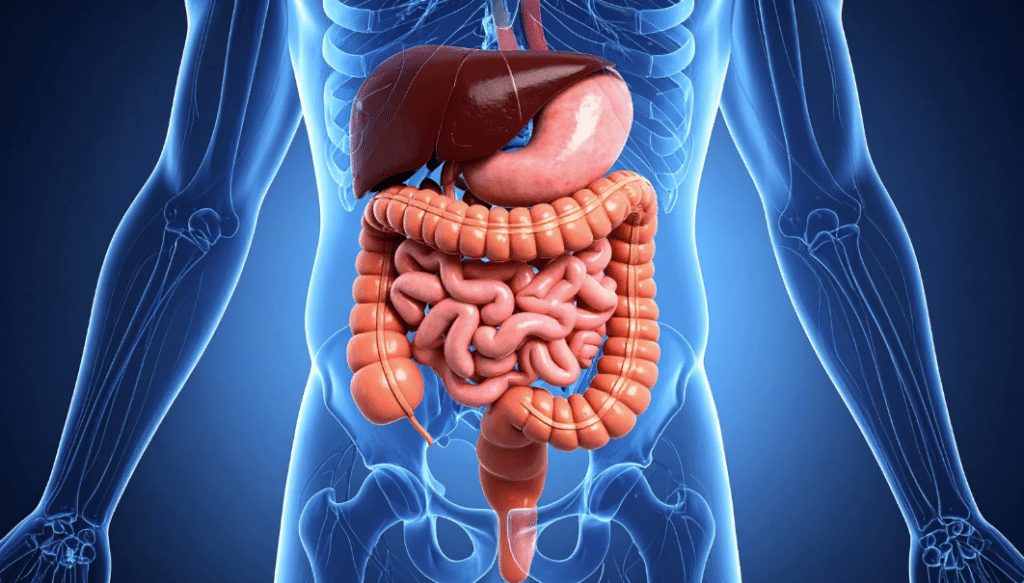
This is often where people begin focusing more closely on diet, digestive habits, microbiome health, and overall stomach wellness.
Why Retesting Is So Important
One mistake many people make is assuming symptom improvement automatically means the infection has been eradicated.
Unfortunately, symptoms alone don’t always tell the full story.
Some people feel temporarily better even when H. pylori remains present.
That’s why proper follow-up testing is so important.
Depending on the situation, healthcare providers may recommend:
- Urea breath testing
- Stool antigen testing
- PCR stool testing
- Endoscopy-based testing
Without retesting, it’s difficult to know whether treatment was truly successful.
For anyone navigating ongoing digestive symptoms, confirmation matters.
The Part Few People Talk About: The Emotional Toll
Persistent digestive symptoms affect far more than the stomach.
When symptoms continue month after month, everyday life often becomes more complicated.
Meals become stressful.
Travel requires planning.
Social events feel less enjoyable.
People begin second-guessing foods they once ate without concern.
After multiple treatment attempts, many start questioning whether they’ll ever feel normal again.
This emotional burden rarely appears in medical literature, but it’s something many people experience firsthand.
And it often becomes one of the biggest reasons people continue searching for alternatives, answers, and additional support.

Why More People Begin Exploring Natural Digestive Wellness Strategies
After unsuccessful treatment attempts or lingering digestive discomfort, many individuals start looking beyond the initial treatment phase.
Not because they’re looking for shortcuts.
Usually because they’re looking for a clearer path forward.
Some focus on improving dietary habits. Others work on stress management, digestive routines, or microbiome-friendly practices.
Many also begin exploring natural digestive wellness programs designed to complement a broader health strategy.
For people who feel they’ve spent months bouncing between disconnected approaches, a more focused routine can sometimes feel easier to follow than continually experimenting with new ideas.
CLICK HERE for more information on natural approaches to H. pylori.
This content is provided for educational and informational purposes only. It is not intended as medical advice or a substitute for consultation with a qualified healthcare provider. Always seek the advice of your doctor or other qualified health professional with any questions you may have regarding a medical condition.
A Different Approach for People Looking for Greater Clarity
Since 2006, we’ve worked with individuals experiencing H. pylori-related digestive challenges, ongoing stomach irritation, reflux, gastritis discomfort, and repeated treatment frustration.
One pattern became increasingly clear.
Many people weren’t necessarily looking for more information.
They were looking for a clearer process.
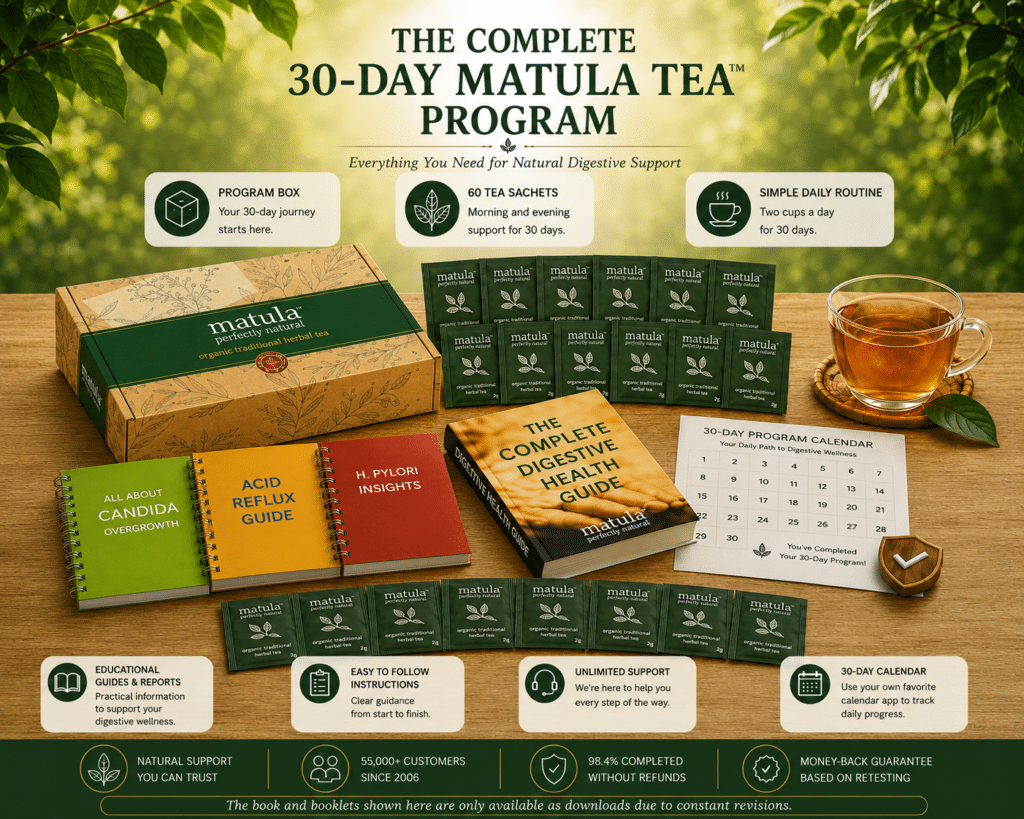
That’s one reason the 30-day Matula Tea™ program was developed.
Rather than focusing on isolated products, the program combines:
- Daily use of Matula Tea™
- Educational resources
- Practical digestive wellness guidance
- Ongoing customer support
- A structured daily routine
The goal is not to replace medical care or promise outcomes.
The objective is to provide a more focused digestive wellness approach for individuals seeking greater consistency and direction while supporting overall stomach health.
This program is designed to support general digestive wellness and provide a structured approach. It is not intended as medical advice or a replacement for professional care. Statements on this website have not been evaluated by the Food and Drug Administration. This product is not intended to diagnose, treat, cure, or prevent any disease.
See How the 30-Day Program Works
If you’ve experienced unsuccessful treatment attempts, ongoing digestive discomfort, or uncertainty about what to do next, understanding your available options is an important next step.
The 30-day Matula Tea™ program was created for individuals seeking a more focused digestive wellness approach after conventional treatment, ongoing symptoms, or persistent frustration.
Learn more about how the program works and whether it may be appropriate for your situation.
This content is provided for educational and informational purposes only. It is not intended as medical advice or a substitute for consultation with a qualified healthcare provider. Always seek the advice of your doctor or other qualified health professional with any questions you may have regarding a medical condition.
Before You Decide on Your Next Step
For many people, the most difficult part isn’t the diagnosis.
It’s deciding what to do after treatment doesn’t go as expected.
If you’re still evaluating your options, comparing approaches, or trying to better understand the factors that may influence long-term outcomes, our decision guide may help.
The guide walks through seven important questions many people wish they had asked earlier, helping you evaluate different approaches more objectively and with greater confidence.

This program is designed to support general digestive wellness and provide a structured approach. It is not intended as medical advice or a replacement for professional care. Statements on this website have not been evaluated by the Food and Drug Administration. This product is not intended to diagnose, treat, cure, or prevent any disease.
References
World Gastroenterology Organisation – Helicobacter pylori in Developing Countries
https://www.worldgastroenterology.org/guidelines/helicobacter-pylori
National Center for Biotechnology Information (PMC) – Helicobacter pylori Resistance to Antibiotics
https://pmc.ncbi.nlm.nih.gov/articles/PMC9952372/
MDPI Antibiotics – Antibiotic Resistance and Therapy for Helicobacter pylori Infection
https://www.mdpi.com/2079-6382/12/12/1669
Mayo Clinic – Helicobacter pylori Infection
https://www.mayoclinic.org/diseases-conditions/h-pylori/symptoms-causes/syc-20356171
MedlinePlus – Helicobacter pylori Infections
https://medlineplus.gov/helicobacterpyloriinfections.html