
How a Common Stomach Infection Can Influence Lymphatic Tissue
MALT lymphoma is a rare type of cancer that develops within the body’s mucosa-associated lymphoid tissue, most commonly in the stomach. One of the most remarkable aspects of this condition is its close association with H. pylori, a bacterial infection that affects millions of people worldwide.
For many patients, identifying and addressing H. pylori becomes an important part of the treatment process. In some cases, successful eradication of the infection may lead to regression of early-stage gastric MALT lymphoma, highlighting just how closely these two conditions are connected.
Understanding the relationship between H. pylori and MALT lymphoma can help patients better navigate diagnosis, treatment decisions, and long-term digestive health.
What Is MALT Lymphoma?
MALT lymphoma stands for Mucosa-Associated Lymphoid Tissue Lymphoma. It is a form of extranodal marginal zone B-cell lymphoma that develops outside the lymph nodes, often within the stomach lining.
Unlike many cancers that originate directly from stomach tissue, MALT lymphoma develops within lymphatic tissue that forms in response to ongoing immune stimulation.
One of the strongest known triggers for this process is H. pylori.
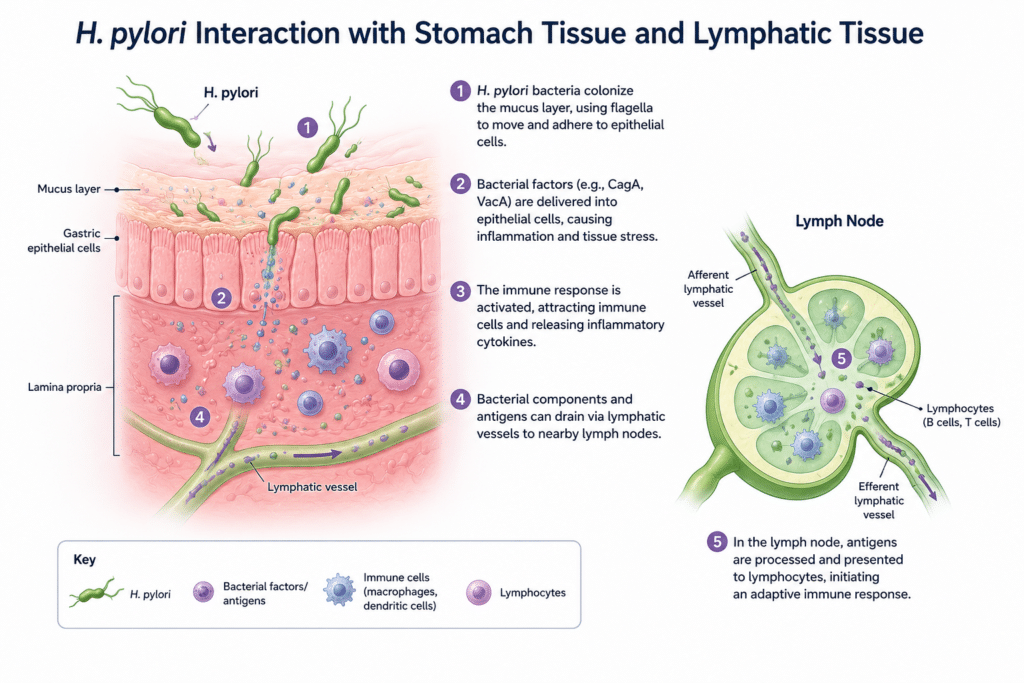
When H. pylori colonizes the stomach lining, it can provoke a prolonged immune response. Over time, this persistent stimulation may encourage the accumulation of lymphoid tissue within the stomach. In a small number of individuals, these lymphoid cells can undergo abnormal changes that eventually lead to lymphoma.
Because of this relationship, H. pylori is considered one of the most important risk factors for gastric MALT lymphoma.
Symptoms and Diagnosis
One of the challenges with MALT lymphoma is that symptoms are often subtle and easily mistaken for other digestive conditions.
People may experience:
- Persistent indigestion
- Upper abdominal discomfort
- Bloating
- Nausea
- Reduced appetite
- Unexplained weight loss
- Fatigue
In some cases, gastrointestinal bleeding may occur.
Because these symptoms overlap with many other stomach disorders, diagnosis typically requires a combination of medical evaluation and testing.
Endoscopy is commonly used to examine the stomach lining directly and obtain biopsy samples. These tissue samples help determine whether lymphoma is present and provide important information about disease stage and severity.
Testing for H. pylori is also routinely performed because of its well-established role in gastric MALT lymphoma.

How H. pylori Contributes to MALT Lymphoma
The connection between H. pylori and MALT lymphoma is driven largely by the body’s immune response.
When H. pylori establishes itself within the stomach lining, the immune system responds by sending immune cells to the affected area. This ongoing battle creates chronic inflammation within the stomach.
Over time, lymphoid tissue may begin to accumulate within the gastric mucosa. While this response is initially protective, prolonged stimulation can increase the likelihood of abnormal cellular changes.
Researchers believe this process helps explain why eliminating H. pylori can sometimes lead to regression of early-stage MALT lymphoma.
The infection is not simply associated with the disease—it often plays a direct role in sustaining the environment that allows the lymphoma to persist.

Treatment Approaches for MALT Lymphoma
Treatment decisions depend on several factors, including disease stage, location, and whether H. pylori infection is present.
For patients with H. pylori-positive gastric MALT lymphoma, eradication therapy is often the first step. This typically involves antibiotics combined with acid-suppressing medication.
Successful treatment of the infection may lead to significant regression of lymphoma in some patients, particularly when the disease is detected early.
When lymphoma persists or has progressed beyond early stages, additional treatments may be recommended, including:
- Radiation therapy
- Immunotherapy
- Targeted therapies
- Chemotherapy in selected cases
Treatment planning should always be guided by qualified healthcare professionals familiar with the patient’s specific situation.
Why Early Detection Matters
The close relationship between H. pylori and MALT lymphoma creates a valuable opportunity for early intervention.
Identifying and addressing H. pylori before significant disease progression may help reduce ongoing stomach inflammation and support better long-term outcomes.
Beyond its association with MALT lymphoma, H. pylori has also been linked to:
- Chronic gastritis
- Peptic ulcers
- Certain forms of stomach cancer
For this reason, persistent digestive symptoms should not be ignored, particularly when symptoms continue despite lifestyle modifications or previous treatment attempts.

Exploring Natural Digestive Wellness Approaches
While conventional medical care remains central to the management of MALT lymphoma, some individuals also explore additional ways to support digestive wellness during and after treatment.
These approaches may include dietary improvements, probiotic use, stress management, and digestive wellness programs designed to encourage a healthier gastrointestinal environment.
One option some people investigate is the 30-day Matula Tea™ program. The program was developed for individuals interested in natural digestive wellness approaches related to H. pylori concerns and provides a defined routine built around a blend of wild-harvested herbs.
For individuals seeking a structured digestive wellness approach alongside broader health goals, the program may represent one component of a more comprehensive strategy.

This program is designed to support general digestive wellness and provide a structured approach. It is not intended as medical advice or a replacement for professional care. Statements on this website have not been evaluated by the Food and Drug Administration. This product is not intended to diagnose, treat, cure, or prevent any disease.
Making a More Informed Decision
For many people, learning about MALT lymphoma begins with learning about H. pylori. Understanding how a common bacterial infection can influence lymphatic tissue development highlights the importance of early diagnosis, appropriate treatment, and informed decision-making.
Some individuals continue researching after receiving a diagnosis because they want a clearer understanding of their options, treatment considerations, and the factors that may influence long-term digestive health.
If you’re currently evaluating approaches related to H. pylori and digestive wellness, the guide below may help you compare options more objectively and identify the questions worth asking before deciding on your next step.
This content is provided for educational and informational purposes only. It is not intended as medical advice or a substitute for consultation with a qualified healthcare provider. Always seek the advice of your doctor or other qualified health professional with any questions you may have regarding a medical condition.
References
National Cancer Institute – MALT Lymphoma
https://www.cancer.gov/publications/dictionaries/cancer-terms/def/malt-lymphoma
StatPearls – Mucosa Associated Lymphoid Tissue Lymphomas (MALTomas)
https://www.ncbi.nlm.nih.gov/books/NBK553122/
StatPearls – Helicobacter Pylori Infection
https://www.ncbi.nlm.nih.gov/books/NBK534233/
American Cancer Society – What Is MALT Lymphoma?
https://www.cancer.org/cancer/types/non-hodgkin-lymphoma/about/what-is-non-hodgkin-lymphoma.html
Merck Manual Consumer Version – Helicobacter pylori Infection
https://www.merckmanuals.com/home/digestive-disorders/gastritis-and-peptic-ulcer-disease/helicobacter-pylori-infection