
Why More People Are Looking Beyond Triple Therapy for H. pylori
For years, triple therapy and quadruple therapy have been the standard medical treatments for H. pylori.
And for many individuals, these therapies still help successfully clear the infection. Healthcare professionals also continue playing an important role in diagnosis, testing, and treatment planning.
At the same time, more people are beginning to ask difficult questions about treatment success rates, side effects, and what happens when symptoms continue after antibiotics.
And honestly, that shift makes sense.
Many individuals dealing with ongoing:
- reflux
- bloating
- stomach irritation
- digestive discomfort
- recurring digestive flare-ups
eventually start researching whether there are gentler or more manageable digestive wellness support options available.
This is where Matula Tea often enters the conversation.

Why Triple Therapy and Quadruple Therapy Sometimes Fail
Triple therapy typically combines:
- two antibiotics
- a proton pump inhibitor (PPI)
Quadruple therapy usually adds:
- bismuth
- or an additional antibiotic
For some individuals, these treatments work well.
For others, the experience becomes much more frustrating.
One major reason involves antibiotic resistance.
Researchers continue monitoring resistance involving antibiotics such as:
- clarithromycin
- metronidazole
- levofloxacin
In some regions, resistance rates have increased significantly, which may reduce treatment effectiveness depending on the strain involved.
That does not mean antibiotics no longer work.
Far from it.
But it does help explain why some individuals eventually require:
- repeat treatment cycles
- alternative drug combinations
- longer recovery periods
- second-line therapies
And honestly, many people become emotionally exhausted after multiple rounds of treatment without clear improvement.

The Side Effects Discussion Matters Too
Another reason many individuals begin researching alternatives is the treatment experience itself.
Commonly discussed side effects during therapy include:
- nausea
- diarrhea
- bloating
- metallic taste
- stomach irritation
- fatigue
- digestive disruption
Broad-spectrum antibiotics may also reduce beneficial bacteria involved in digestion and microbial balance discussions.
For some individuals, this contributes to:
- digestive instability
- stomach sensitivity
- altered bowel habits
- lingering reflux or bloating
even after treatment ends.
One individual discussing failed triple therapy online described feeling physically drained after repeated antibiotic rounds and ongoing digestive discomfort afterward.
And honestly, experiences like this are one reason broader digestive wellness discussions continue growing.

Why Some Individuals Explore Natural Digestive Wellness Support
Many people exploring natural H. pylori support are not necessarily anti-medication.
Usually, they are simply looking for:
- gentler digestive support
- fewer disruptive side effects
- more manageable routines
- broader stomach balance support
- long-term digestive consistency
This is where Matula Tea is often discussed as part of a more structured digestive wellness approach.
How the Matula Tea Program Works
Matula Tea forms part of a structured 30-day digestive wellness support program focused on:
- stomach health
- digestive balance
- gut wellness
- long-term digestive consistency
The tea itself contains a blend of wild-harvested South African herbs traditionally associated with digestive wellness support.
The program includes:
- twice-daily tea servings
- educational guidance
- free ongoing support
- a money-back guarantee based on program criteria
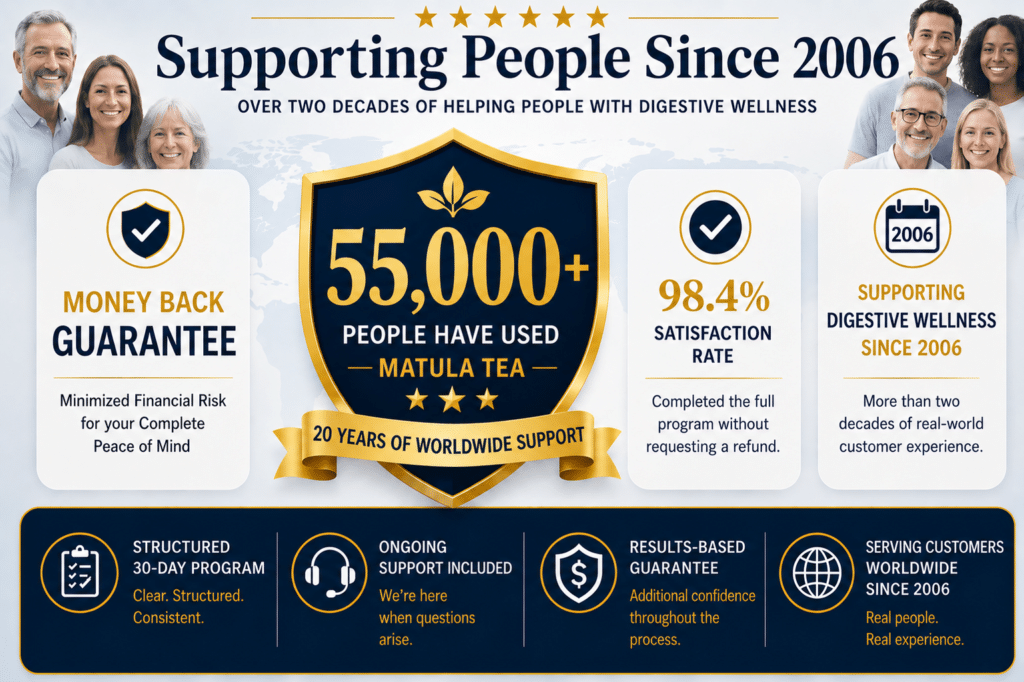
Since 2006, more than 55,000 individuals worldwide have explored the program while researching broader H. pylori and digestive wellness concerns.
One thing many individuals appreciate is the simplicity.
Rather than juggling:
- multiple medications
- restrictive supplement stacks
- constantly changing protocols
the program follows a relatively straightforward structure focused on consistency and daily routine support.
Laboratory Research and Scientific Interest
Independent laboratory testing involving the Matula Tea herbal blend explored antibacterial activity under controlled conditions connected to H. pylori discussions.
The testing was conducted by Prof. Patrick Bouic, PhD.
Importantly, laboratory findings should always be interpreted carefully.
In vitro testing does not automatically guarantee identical human outcomes in every individual.
That distinction matters and should always be acknowledged honestly.
Still, many individuals appreciate seeing digestive wellness support discussed alongside:
- laboratory testing
- structured program guidance
- long-term practical experience
- real-world customer observations
rather than relying entirely on vague wellness marketing.
Why Doctors Rarely Discuss Natural H. pylori Programs
One thing many people notice is that natural digestive wellness programs are rarely mentioned during standard medical appointments.
There are several reasons for this.
Most conventional medical training focuses heavily on:
- pharmaceuticals
- diagnostics
- clinical treatment guidelines
Natural digestive wellness programs generally sit outside:
- insurance systems
- standard pharmaceutical pathways
- approved treatment algorithms
Many healthcare professionals have also simply never encountered structured herbal digestive wellness programs like Matula Tea before.
That does not automatically mean natural approaches lack value.
Usually, they fall outside the conventional systems doctors are trained to follow.
Why Some People Prefer a Structured Digestive Wellness Program
One thing we’ve noticed repeatedly since 2006 is that many individuals eventually stop looking for “miracle fixes.”
Instead, they start looking for:
- realistic routines
- calmer recovery approaches
- manageable consistency
- broader digestive support
And honestly, that shift often changes the entire recovery experience.
Many people simply feel better following:
- structured guidance
- supportive routines
- practical daily habits
rather than constantly jumping between disconnected supplements and aggressive protocols.
Choosing an Approach You Can Actually Follow
At the end of the day, the best digestive wellness approach is often the one a person can realistically follow consistently.
Some individuals prefer conventional treatment first.
Others begin exploring structured natural digestive wellness support after:
- recurring symptoms
- difficult side effects
- failed treatment attempts
- ongoing digestive frustration
And honestly, many people ultimately combine:
- medical guidance
- digestive wellness support
- realistic daily habits
- gut balance awareness
to create a calmer and more manageable long-term approach.

Start the 30-Day Program for Natural H. pylori Support
When you are dealing with ongoing digestive discomfort, waiting often leads to more frustration.
A structured approach gives you clarity and direction from day one.
- 30-day herbal program designed to support digestive wellness
- Clinically researched herbal formula
- Free support throughout your program and beyond
- Trusted by 65,000+ customers since 2006
- Money-back guarantee based on program criteria
Explore our natural approach to H. pylori support that has a clear step-by-step plan.
This program is designed to support general digestive wellness and provide a structured approach. It is not intended as medical advice or a replacement for professional care. Statements on this website have not been evaluated by the Food and Drug Administration. This product is not intended to diagnose, treat, cure, or prevent any disease.
How we measure the success of our 30-day Matula Tea program…
Since 2006, more than 55,000 people worldwide have used and trusted Matula Tea – the core of our structured 30-day Matula Tea™ program. Remarkably, over 98.4% completed our program without requesting a refund — a strong reflection of long-term customer satisfaction.

FAQ’s
Treatment failure may involve factors such as antibiotic resistance, incomplete eradication, digestive disruption, or difficulty tolerating treatment protocols consistently.
No. Triple therapy and quadruple therapy may still help many individuals successfully clear H. pylori, and healthcare professionals remain important for diagnosis and treatment planning.
Many individuals look for gentler digestive support approaches with fewer disruptive side effects and more focus on long-term stomach balance and digestive consistency.
Many individuals prefer a structured program because it provides consistency, guidance, and ongoing support rather than relying on trial-and-error approaches. Since 2006, the Matula Tea Program has supported more than 55,000 individuals worldwide and also includes a money-back guarantee based on program criteria.
Independent laboratory testing explored antibacterial activity associated with the Matula Tea herbal blend under controlled conditions involving H. pylori discussions. Many people still appreciate seeing digestive wellness support explored through both laboratory research and long-term real-world experience since 2006.
Key Takeaways
- Many individuals question the effectiveness of triple and quadruple therapy for H. pylori due to treatment failures and side effects.
- Common issues include antibiotic resistance, ongoing symptoms, and side effects such as nausea and digestive disruption.
- As a gentler alternative to triple therapy, Matula Tea offers a structured 30-day wellness program focusing on digestive health.
- The program emphasizes consistent daily routines and includes educational support, which many find beneficial compared to random treatments.
- Despite traditional medicine’s focus on pharmaceuticals, some patients prefer natural alternatives like Matula Tea for sustained digestive wellness.
References
- Mayo Clinic — Helicobacter pylori Infection (Updated 2024)
https://www.mayoclinic.org/diseases-conditions/h-pylori/symptoms-causes/syc-20356171 - Frontiers in Microbiology — Treatment of Refractory Helicobacter pylori Infection (Published 2022)
https://www.frontiersin.org/journals/microbiology/articles/10.3389/fmicb.2022.998240/full - NIH — Helicobacter pylori Resistance to Antibiotics (Published 2023)
https://pmc.ncbi.nlm.nih.gov/articles/PMC9952372/ - Harvard Nutrition Source — The Microbiome (Updated 2024)
https://nutritionsource.hsph.harvard.edu/microbiome/ - Cleveland Clinic — Gastritis (Updated 2024)
https://my.clevelandclinic.org/health/diseases/10349-gastritis