
Understanding How H. pylori Can Spread Within Families
When one person in a household discovers they have H. pylori, an important question often follows:
“Could someone else in my family have it too?”
It’s a valid concern.
H. pylori is a common bacterial infection that can spread between individuals through close contact and shared environments. Partners, children, and other household members may all be exposed through everyday interactions without realizing it.
Understanding how transmission occurs is often the first step toward reducing the risk of cross-infection and creating a healthier environment for everyone in the home.

How H. pylori Cross-Infection Happens
In many cases, H. pylori spreads silently.
People often carry the bacteria for years without knowing it, making transmission difficult to track.
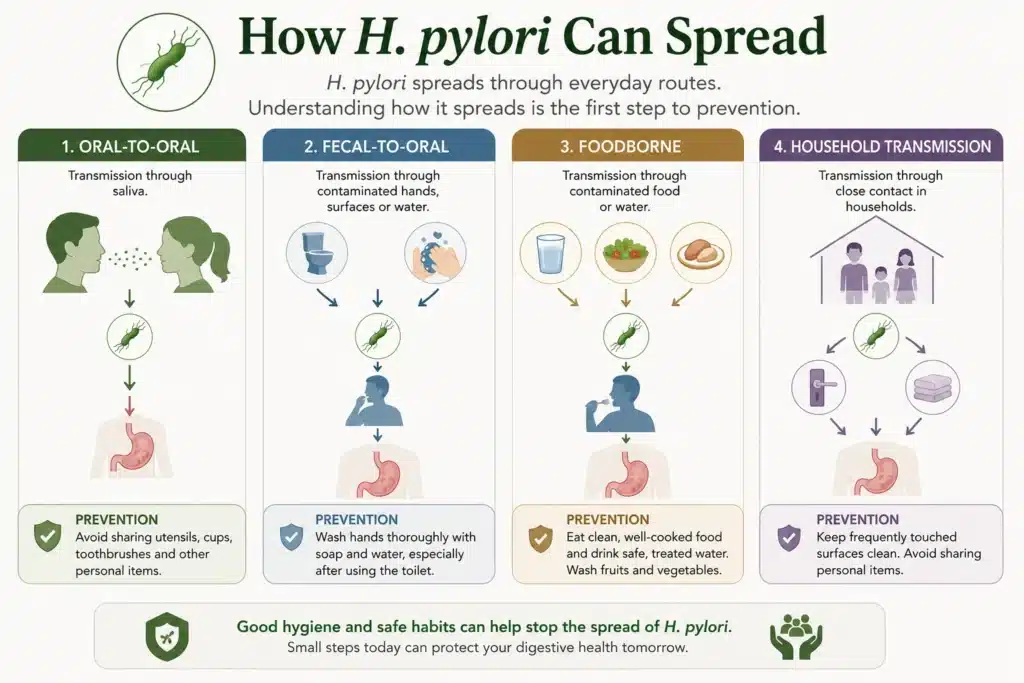
Research suggests that H. pylori may spread through contact with saliva, vomit, or fecal matter from an infected individual. Within households, exposure can occur through close family interactions, shared living spaces, and everyday habits.
Common transmission pathways may include:
- Sharing eating utensils
- Sharing drinking glasses
- Shared toothbrushes
- Poor hand hygiene
- Food preparation practices
- Close personal contact
The risk is not always obvious. Many families unknowingly create opportunities for transmission simply because they share common household items and routines.
Household Risk Factors Worth Paying Attention To
Certain living situations may increase the likelihood of exposure.
For example, crowded households naturally create more opportunities for close contact. Families with young children often face additional challenges because younger children may not yet have fully developed hygiene habits.
Shared bathrooms, shared eating spaces, and shared personal items can all increase opportunities for transmission if proper hygiene practices are not consistently followed.
If one member of the household has already been diagnosed with H. pylori, it is reasonable to consider whether others may also have been exposed.
That does not mean everyone in the home is infected.
It simply means awareness becomes more important.
Recognizing Possible Symptoms Within The Family
One of the challenges with H. pylori is that symptoms can vary considerably.
Some individuals experience noticeable digestive discomfort, while others have no symptoms at all.
When symptoms do occur, they may include:
- Bloating
- Nausea
- Stomach discomfort
- Frequent burping
- Reflux
- Reduced appetite
- A feeling of fullness after eating
Because these symptoms overlap with many other digestive conditions, testing is often the only reliable way to determine whether H. pylori is present.
Why Testing Matters
One positive test result within a household often raises questions about everyone else.
Should partners be tested?
Should children be tested?
Could asymptomatic family members be carrying the bacteria?
These are questions best discussed with a healthcare professional, but they highlight why testing can play an important role when H. pylori is identified within a family.
Modern testing options may include:
- Breath testing
- Stool testing
- Blood testing
- Endoscopic testing in certain situations
Testing helps remove uncertainty and allows families to make decisions based on evidence rather than assumptions.

Breaking The Cycle Of Reinfection
One concern frequently raised by families is the possibility of reinfection.
If one individual receives treatment while another household member remains infected, some people worry about ongoing exposure within the home.
Although every situation is unique, this concern highlights the importance of considering household health as a whole rather than focusing solely on one person.
Practical steps that may help reduce transmission opportunities include:
- Thorough handwashing
- Avoiding shared toothbrushes
- Maintaining good kitchen hygiene
- Proper food preparation
- Using separate drinking containers where practical
- Keeping shared spaces clean
Simple habits often make a meaningful difference when combined with appropriate testing and professional guidance.

Where Natural Digestive Wellness Approaches Fit
Once families begin researching H. pylori, they often encounter a wide range of treatment and wellness approaches.
Conventional antibiotic-based therapies remain the most common medical treatment and have helped many individuals successfully address H. pylori infections.
At the same time, some people explore additional digestive wellness approaches as part of their broader efforts to support stomach health and digestive balance.
One option many families investigate is the 30-day Matula Tea™ program.
The program combines a proprietary herbal formulation with a defined daily routine and ongoing support resources. For people who prefer a structured approach, having a clear plan can often feel easier than piecing together multiple supplements, diets, and protocols independently.
This program is designed to support general digestive wellness and provide a structured approach. It is not intended as medical advice or a replacement for professional care. Statements on this website have not been evaluated by the Food and Drug Administration. This product is not intended to diagnose, treat, cure, or prevent any disease.


Protecting Your Family Starts With Awareness
When it comes to H. pylori cross-infection, knowledge is often one of the most valuable tools available.
Understanding how transmission occurs, recognizing potential symptoms, maintaining good hygiene practices, and considering appropriate testing can help families make more informed decisions.
The goal is not to create fear.
The goal is to reduce uncertainty and provide a clearer understanding of the options available when H. pylori becomes part of the conversation.
This content is provided for educational and informational purposes only. It is not intended as medical advice or a substitute for consultation with a qualified healthcare provider. Always seek the advice of your doctor or other qualified health professional with any questions you may have regarding a medical condition.
Before Making Your Next Decision
If you are currently researching H. pylori because of concerns about family exposure, ongoing digestive symptoms, repeat infections, or uncertainty about what to do next, it can be helpful to step back and evaluate your options carefully.
Many people find greater clarity when they understand the important questions to ask before choosing a particular approach.
The guide below was created to help individuals compare options more objectively, understand key considerations, and make more informed decisions before moving forward.
References
Johns Hopkins Medicine – Helicobacter Pylori
https://www.hopkinsmedicine.org/health/conditions-and-diseases/helicobacter-pylori
MedlinePlus – Helicobacter pylori Tests
https://medlineplus.gov/lab-tests/helicobacter-pylori-tests
Cleveland Clinic – H. pylori Infection
https://my.clevelandclinic.org/health/diseases/21463-h-pylori-infection
World Gastroenterology Organisation – Helicobacter pylori Guidelines
https://www.worldgastroenterology.org/guidelines/global-guidelines/helicobacter-pylori