
Your guide to understanding H. pylori, testing options, medical care and natural digestive support
Helicobacter pylori (H. pylori) is a bacterium that can live in the stomach lining. It is associated with several digestive conditions, including gastritis and peptic ulcers.
Understanding H. pylori can raise many questions.
What symptoms should you look for? Which tests can identify an active infection? What happens when symptoms continue after medical care? And what should you consider when researching natural approaches to digestive wellness?
We created this H. pylori Resource Center to bring useful information together in one place.
Whether you are beginning your research, preparing for a medical appointment or comparing different approaches to digestive health, you can use the resources below to explore each subject in more detail.
Start with the topic that best matches your questions.
1. Understanding H. pylori
What is H. pylori?
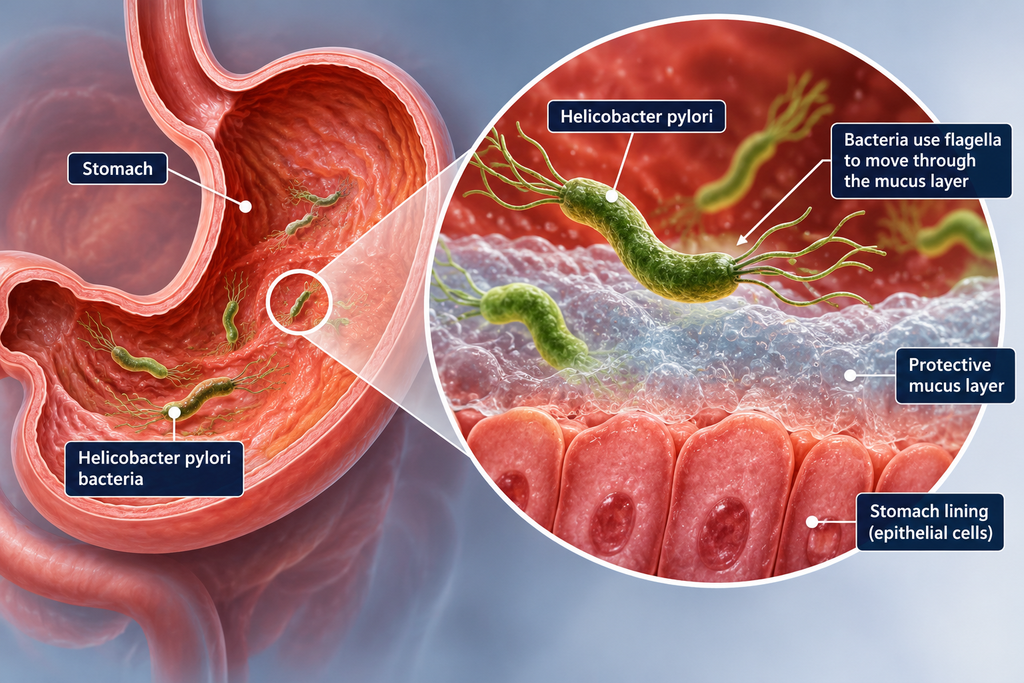
H. pylori is a spiral-shaped bacterium that can colonise the stomach lining. Many people carry the bacterium without noticeable symptoms.
In some individuals, infection is associated with chronic gastritis, peptic ulcers and an increased risk of certain stomach cancers.
Symptoms alone cannot establish whether someone has an H. pylori infection. Appropriate testing and medical assessment are needed.
Explore these topics:
2. H. pylori Symptoms, Testing and Diagnosis
Understanding symptoms
H. pylori does not produce the same symptoms in everyone. Some people experience upper abdominal discomfort, bloating, nausea or indigestion. Others have no noticeable symptoms.
These symptoms can also occur with other digestive conditions. They should not be used alone to diagnose an infection.
Understanding your testing options
Several medical tests can help identify H. pylori.
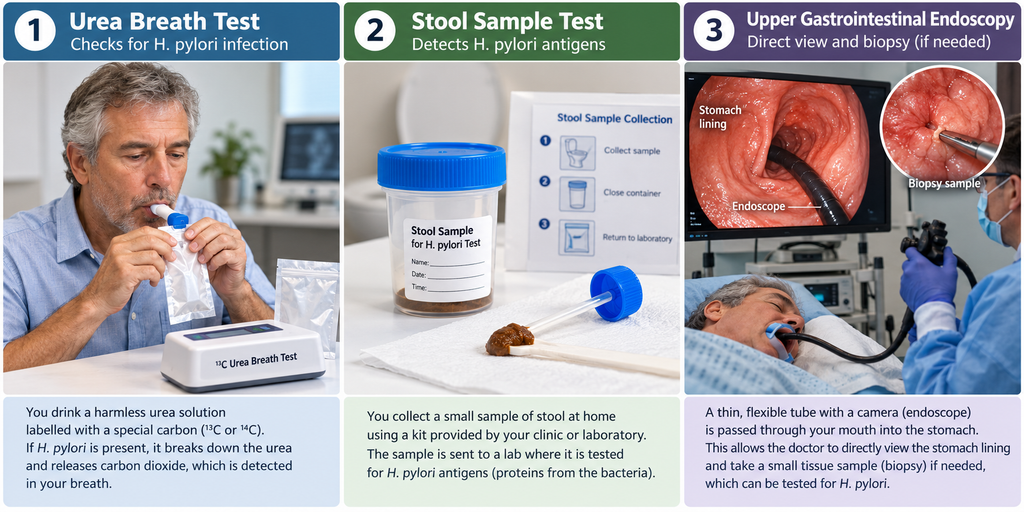
Urea breath test
This test detects changes in labelled carbon dioxide after you swallow a preparation containing labelled urea.
Stool antigen test
This test looks for H. pylori antigens in a stool sample and can help identify an active infection.
Upper gastrointestinal endoscopy
A specialist examines the upper digestive tract using a flexible camera. They may collect stomach tissue samples for laboratory examination.
Blood antibody testing
Blood tests can detect antibodies associated with previous exposure. They cannot reliably distinguish an active infection from a past infection and are not suitable for confirming eradication after medical care.
Testing conditions matter. Certain medicines can affect results. Your healthcare provider can advise you about the appropriate preparation.
Explore this topic:
3. Medical Care and Antibiotic Resistance
Understanding conventional medical care
Healthcare professionals commonly manage confirmed H. pylori infections with combinations of antibiotics and acid-suppressing medication.
The specific medicines depend on several factors, including previous antibiotic exposure, allergies, local resistance patterns and current clinical guidance.
Antibiotic resistance is one reason some treatment combinations may not work as expected.
Why antibiotic resistance matters
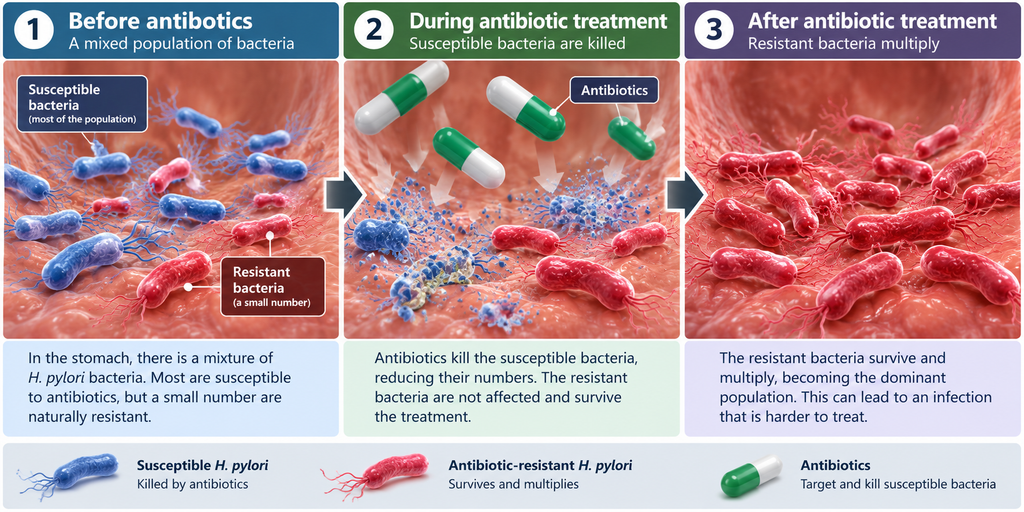
Antibiotic resistance occurs when bacteria develop or acquire characteristics that allow them to survive exposure to particular antibiotics.
When susceptible bacteria are reduced, resistant bacteria may survive and multiply.
This can make subsequent medical management more complicated.
The 2024 American College of Gastroenterology guideline highlights the need to consider antibiotic susceptibility when selecting certain antibiotic combinations.
Patients should discuss persistent infection and further options with their healthcare provider rather than independently repeating antibiotics.
Explore these topics:
4. After Medical Care: Persistent Symptoms and Recurrence
Why symptoms may continue
Some people continue experiencing digestive discomfort after completing medical treatment for H. pylori.
Persistent symptoms do not automatically mean the infection remains present.
Other digestive conditions may contribute to ongoing symptoms. These can include reflux, functional dyspepsia, gastritis and other gastrointestinal problems.
A healthcare professional can help determine whether further investigation is appropriate.
Understanding recurrence and reinfection
H. pylori can sometimes be detected again after previous medical care.
There are several possible explanations:
- The original infection may not have been successfully cleared.
- The bacterium may have returned after an initially negative follow-up test.
- A person may have acquired a new infection.
These possibilities are not interchangeable. Appropriate follow-up testing and medical assessment help distinguish them.
Why follow-up testing matters
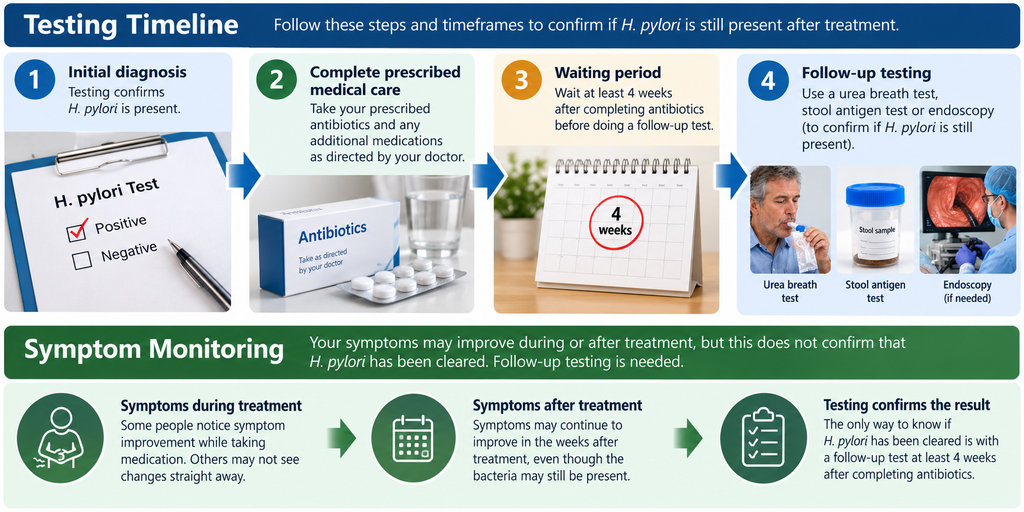
The American College of Gastroenterology recommends confirming eradication after medical treatment using an appropriate urea breath test, stool antigen test or biopsy-based test.
For adults, the guideline recommends testing at least four weeks after completing antibiotics. Proton pump inhibitors and potassium-competitive acid blockers generally need to be withheld for two weeks before testing, under healthcare provider guidance.
Explore this topic:
5. Research and Natural Approaches to H. pylori Support
Understanding the research
Natural approaches to digestive wellness attract interest from people researching different ways to support their digestive health.
Research into herbs and plant compounds includes several types of evidence.
These include:
- Laboratory studies examining activity under controlled conditions.
- Animal studies investigating biological effects.
- Human clinical studies evaluating safety and outcomes in people.
- Observational reports describing individual experiences.
These forms of evidence are not interchangeable.
For example, a laboratory study showing activity against bacteria does not establish that the same effect occurs inside the human stomach.
Human clinical research is needed to evaluate outcomes in people.
Research into herbal ingredients
Scientists continue investigating various plant compounds and their potential biological properties.
Some research explores antimicrobial activity under laboratory conditions. Other studies examine digestive health, inflammation and interactions with the gastrointestinal environment.
The findings need to be assessed according to the research methods, study design and limitations.
Independent laboratory research involving Matula Tea
Matula Tea has been the subject of independent laboratory research involving its herbal blend and H. pylori strains under controlled conditions.
This research provides information about laboratory observations. It does not establish clinical effectiveness in humans or demonstrate that Matula Tea can replace medical care.
We believe readers should have access to the research information and understand the distinction between laboratory findings and human clinical evidence.
Explore these resources:
- Evaluating H. pylori Options
- Matula Tea: The Facts and Research
- Supporting Stomach Health and Digestive Wellness

6. Digestive Health, Diet and Related Conditions
Understanding the wider digestive picture
H. pylori is one factor that may contribute to digestive health concerns. It is not the only possible explanation for stomach discomfort.
Gastritis, peptic ulcers, reflux and functional digestive disorders can produce overlapping symptoms.
Understanding these conditions can help you prepare better questions for your healthcare provider.
Food and digestive wellness
People researching H. pylori often have questions about diet.
There is no single diet that can reliably eradicate H. pylori. Food choices may influence digestive comfort, and individual tolerances vary.
A balanced eating pattern can help support general health and nutritional needs.
Some people find it useful to monitor their responses to particular foods, especially during periods of digestive discomfort.
Explore these resources:

Exploring the 30-Day Matula Tea Program
Natural H. pylori support since 2006
For readers researching natural digestive wellness approaches, Matula Naturals offers a structured 30-Day Matula Tea Program.
The program centres on a proprietary herbal tea blend made with wild Southern African herbs.
It includes:
- A structured 30-day herbal program.
- Preparation and usage instructions.
- Educational resources.
- Free customer support.
- A money-back guarantee subject to the published terms and conditions.
Matula Tea has been used by customers worldwide since 2006 and has been the subject of independent laboratory research.
We encourage you to review the available product information and research before making a decision.
The program is intended to support general digestive wellness. It is not a medical treatment for H. pylori and should not replace professional diagnosis, prescribed medication or follow-up testing.
Interested in learning more?
Frequently Asked Questions
What is H. pylori?
H. pylori is a bacterium that can live in the stomach lining. It is associated with gastritis, peptic ulcers and an increased risk of certain stomach cancers.
Can you have H. pylori without symptoms?
Yes. Many people with H. pylori do not experience noticeable symptoms. Testing may be appropriate even when symptoms are absent, depending on individual circumstances and medical guidance.
Which tests can identify H. pylori?
Common methods include the urea breath test, stool antigen test and upper gastrointestinal endoscopy with biopsies. Your healthcare provider can help select an appropriate test.
Can symptoms tell you whether H. pylori is still present?
No. Digestive symptoms can have several causes. A suitable follow-up test is needed to determine whether an infection remains after medical treatment.
Why is antibiotic resistance a concern?
Some H. pylori strains resist particular antibiotics. This can affect which medicines healthcare professionals select and why susceptibility information may matter.
Can diet alone eradicate H. pylori?
There is no established diet that reliably eradicates H. pylori. Dietary choices may support general digestive wellness, but they should not replace appropriate medical care.
Is laboratory research the same as clinical evidence?
No. Laboratory research examines biological activity under controlled conditions. Human clinical studies are needed to determine whether an approach produces meaningful outcomes in people.
Is Matula Tea a replacement for conventional medical care?
No. Matula Tea is a herbal digestive wellness program. It is not intended to diagnose, treat, cure or prevent H. pylori infection or replace professional medical care.
A Note About Your Digestive Health
We believe informed decisions begin with reliable information.
H. pylori can raise complicated questions about symptoms, testing, medical care and ongoing digestive health.
Use the resources in this centre to explore those subjects, review the available evidence and prepare questions for your healthcare provider.
If you are concerned about persistent or severe digestive symptoms, seek appropriate medical assessment.
This content is provided for educational and informational purposes only. It is not intended as medical advice or a substitute for consultation with a qualified healthcare provider. Always seek the advice of your doctor or other qualified health professional with any questions you may have regarding a medical condition.
Research and Medical References
- American College of Gastroenterology. 2024 Clinical Guideline: Treatment of Helicobacter pylori Infection.
https://gi.org/wp-content/uploads/2025/01/ACG-Hpylori-Guidelines-Highlights-2024-FINAL.pdf.pdf - American College of Gastroenterology. Understanding the 2024 H. pylori Guideline.
https://gi.org/journals-publications/ebgi/schoenfeld_sep2024/ - National Institute of Diabetes and Digestive and Kidney Diseases. Diagnosis of Peptic Ulcers.
https://www.niddk.nih.gov/health-information/digestive-diseases/peptic-ulcers-stomach-ulcers/diagnosis - National Institute of Diabetes and Digestive and Kidney Diseases. Diagnosis of Indigestion.
https://www.niddk.nih.gov/health-information/digestive-diseases/indigestion-dyspepsia/diagnosis