
Understanding How H. pylori Spreads
Helicobacter pylori (H. pylori) is a bacterium that can live in the stomach and is associated with conditions such as gastritis, peptic ulcers, and, in some cases, more serious digestive complications.
One of the most common questions people ask after receiving a diagnosis is:
“How did I get infected in the first place?”
The answer is not always straightforward.
Many people carry H. pylori for years without realizing it. In fact, infection often occurs long before symptoms appear. Understanding how H. pylori spreads can help you reduce the risk of transmission, protect family members, and make more informed decisions about testing and treatment.
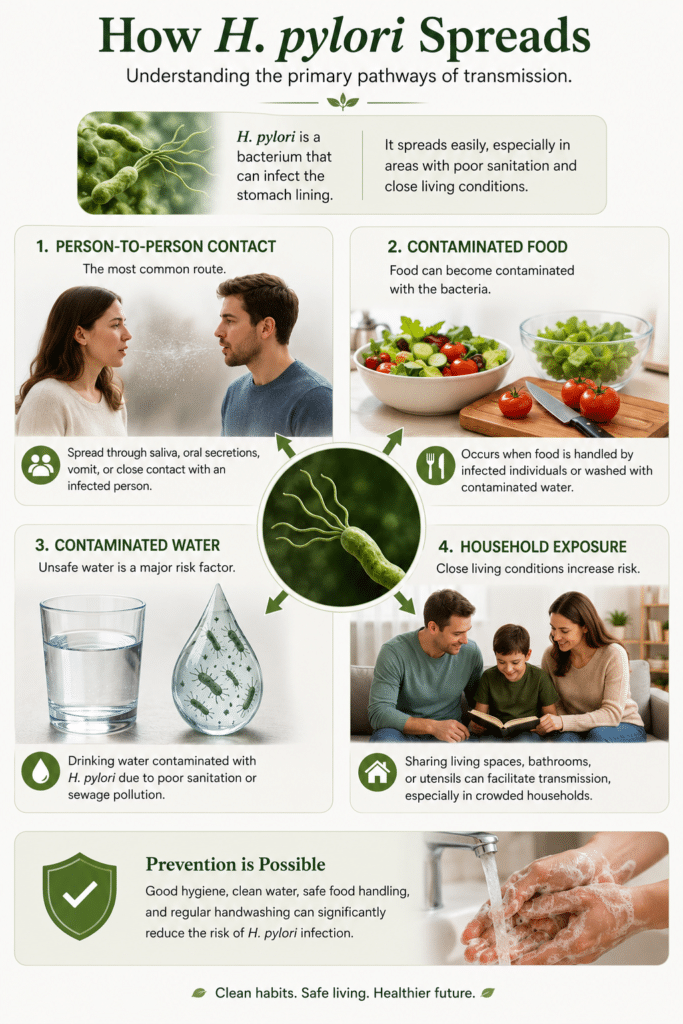
How H. pylori Is Commonly Spread
Researchers believe H. pylori is most commonly transmitted through direct contact with infected individuals or through exposure to contaminated food and water.
While scientists continue to study transmission patterns, two routes appear most frequently:
- Oral-to-oral transmission
- Fecal-to-oral transmission
These routes help explain why H. pylori can spread within households, among close family members, and in environments where sanitation standards are poor.
The risk of exposure is generally higher in areas with crowded living conditions, limited access to clean water, or inadequate hygiene practices.
Person-to-Person Transmission
Close contact remains one of the most widely accepted explanations for how H. pylori spreads.
The bacterium has been detected in saliva and oral secretions, which means transmission may occur through activities involving direct mouth-to-mouth contact.
Examples may include:
- Sharing drinks
- Sharing eating utensils
- Sharing food
- Kissing
This helps explain why H. pylori infections sometimes appear among multiple members of the same household.
Partners and close family members often have similar exposure patterns, making transmission within families an important consideration.

Food, Water, and Environmental Exposure
Contaminated food and water are also believed to contribute to H. pylori transmission.
Raw produce that has not been washed properly, untreated drinking water, and food prepared under poor sanitation conditions may increase the risk of exposure.
Although not every exposure results in infection, public health experts generally recommend:
- Washing fruits and vegetables thoroughly
- Using safe drinking water sources
- Practicing good food hygiene
- Following proper handwashing procedures
These simple habits help reduce the likelihood of exposure to a wide range of digestive pathogens, including H. pylori.

Understanding Household Cross-Infection
One of the most overlooked aspects of H. pylori management is household transmission.
When one member of a household is infected while others remain untreated, the possibility of cross-infection becomes an important consideration.
Cross-infection refers to the ongoing transmission of bacteria between people who live together or share close daily contact.
In some situations, one person may complete treatment successfully while another household member continues to carry the bacterium. This creates the potential for future exposure within the same environment.
For this reason, healthcare providers may sometimes recommend testing close family members when recurrent infections are suspected.

Can H. pylori Return After Treatment?
Many people assume that once treatment is complete, the story is over.
For some individuals, that is exactly what happens.
However, others continue to experience symptoms, receive positive follow-up tests, or begin questioning whether reinfection may have occurred.
A positive result after treatment does not automatically mean reinfection has taken place. Several factors can contribute to persistent or recurring concerns, including treatment effectiveness, testing timing, bacterial resistance patterns, and possible household exposure.
Understanding these possibilities can help guide discussions with healthcare professionals when deciding what steps to take next.
Practical Ways to Reduce the Risk of Transmission
Although no prevention strategy can completely eliminate risk, several practical habits may help reduce opportunities for H. pylori transmission.
Good hand hygiene remains one of the most important measures, particularly after using the restroom and before preparing food.
Families may also benefit from:
- Avoiding shared eating utensils when infection is suspected
- Maintaining food preparation hygiene
- Cleaning commonly touched household surfaces
- Using safe drinking water sources
- Considering testing when multiple household members experience digestive concerns
These simple steps can help reduce the likelihood of ongoing exposure within the home.

Why Understanding Transmission Matters
Knowing how H. pylori spreads helps explain why some infections appear to persist within households and why prevention strategies are often discussed alongside treatment.
It also highlights the importance of identifying potential sources of exposure rather than focusing solely on symptoms.
For many people, learning how infection occurs is the first step toward making more informed decisions about testing, treatment, and long-term digestive health.
Before You Decide What to Do Next
If you’re researching H. pylori because of symptoms, a recent diagnosis, concerns about reinfection, or questions about treatment options, it can be helpful to take a step back and evaluate the bigger picture.
Many people find themselves comparing different approaches, testing options, and recommendations before deciding what to do next.
That’s why we created a practical decision guide designed to help people evaluate their options more objectively and make informed choices with greater confidence.
The guide explores important topics such as evidence, simplicity, support, guarantees, and how to compare different approaches before making a commitment.
This content is provided for educational and informational purposes only. It is not intended as medical advice or a substitute for consultation with a qualified healthcare provider. Always seek the advice of your doctor or other qualified health professional with any questions you may have regarding a medical condition.
FAQ’s
Yes. Researchers believe person-to-person transmission is one of the primary ways H. pylori spreads, particularly among family members and close contacts.
Because H. pylori has been detected in saliva, oral-to-oral transmission is considered a possible route of infection.
Household transmission is well documented, which is why testing close contacts may sometimes be considered when recurring infections are suspected.
Contaminated food and untreated water are considered potential sources of exposure, particularly in areas with poor sanitation.
No. A positive result may be related to several factors, including treatment effectiveness, testing timing, bacterial resistance, or possible reinfection.
This depends on the circumstances and should be discussed with a healthcare provider, particularly when multiple household members have digestive symptoms.
KEY TAKEAWAYS
- H. pylori commonly spreads through person-to-person contact and contaminated food or water.
- Household cross-infection can contribute to ongoing exposure and reinfection concerns.
- Good hygiene and food safety practices may help reduce transmission risks.
- Positive test results after treatment do not automatically mean reinfection has occurred.
- Understanding transmission helps support more informed decisions about testing and treatment.
References
Johns Hopkins Medicine – Helicobacter pylori
https://www.hopkinsmedicine.org/health/conditions-and-diseases/helicobacter-pylori
Mayo Clinic – Helicobacter pylori (H. pylori) Infection
https://www.mayoclinic.org/diseases-conditions/h-pylori/symptoms-causes/syc-20356171
MedlinePlus – Helicobacter pylori Tests
https://medlineplus.gov/lab-tests/helicobacter-pylori-h-pylori-tests/
StatPearls – Helicobacter pylori Infection
https://www.ncbi.nlm.nih.gov/books/NBK534233/
NIH National Library of Medicine – Helicobacter pylori Infection and Transmission
https://pmc.ncbi.nlm.nih.gov/articles/PMC6502203/